
Should I Start a Blog in 2026? Your Honest Decision Guide
- Is Blogging Dead in 2026? (The Honest Answer)
- How AI Has Changed Blogging in 2026
- 7 Good Reasons Why You Should Start a Blog
- 5 Not So Great Reasons (Why You Shouldn’t Start a Blog)
- 8 Important Questions to Ask Yourself Before Starting a Blog
- Should You Start a Blog? Making the Final Decision
- FAQ: Should I Start a Blog?
- Final Thoughts
Want to Start Your Blog (the Right Way)?
Check out my ultimate guide How to Start a Blog (on the Side).
Is Blogging Dead in 2026? (The Honest Answer)
If you’ve heard someone declare that blogging is dead — they’ve been declaring that since at least 2014. They were wrong then and they’re wrong now, but the reasons blogging still works in 2026 are different than they used to be. Here’s what changed. Google’s AI Overviews now answer a huge chunk of simple, low-intent questions inside the search results page. ChatGPT, Perplexity, and Claude do the same in conversational form. That part is real — informational queries that used to send blogs traffic now get answered by AI before the click. Here’s what didn’t change. People still trust real human experience. AI search engines still cite blogs in their answers (and those citations are starting to drive serious referral traffic from ChatGPT, Perplexity, and Google AI Overviews). Money still flows toward bloggers who build genuine expertise, real audiences, and owned email lists. So the framing in 2026 is:- Generic AI-written content is dead. If your plan is “use ChatGPT to crank out 50 posts a month,” you’ll get crushed.
- First-person, expertise-driven blogging is more valuable than ever. Real opinions, original frameworks, and genuine experience are what AI can’t fake — and what readers and AI search engines now reward.
- The bar got higher. You can’t just publish okay content anymore. You need to actually be good, useful, and distinctive.
How AI Has Changed Blogging in 2026
Before we get to the reasons to start (or not start) a blog, here’s the short version of what’s different in the AI era — because most of the “should I blog?” advice you’ll find online was written before any of this existed. What AI does well as a blogger’s tool:- Drafting and outlining. Blog automation tools like ChatGPT and RightBlogger can generate solid first drafts you then heavily edit.
- Editing and polishing. Free tools like my grammar fixer and paraphrase tool turn rough drafts into clean, readable prose.
- Research speed. AI can summarize sources in seconds (verify the facts yourself though — AI hallucinates).
- SEO support. AI helps brainstorm titles, meta descriptions, and content briefs much faster than the old way.
- Have lived experience. AI can’t actually run an experiment, interview a real person, or share an authentic story.
- Have an opinion that matters. AI averages everyone’s opinion. You having a clear, contrarian, well-defended take is what gets cited.
- Build trust with a real human audience. Your face, your name, your email subscribers — those are owned assets AI can’t replicate.
- Earn citations from AI search engines. Ironically, AI search engines like ChatGPT and Google’s AI Overviews preferentially cite content with strong E-E-A-T signals — Experience, Expertise, Authoritativeness, Trustworthiness. AI rewards human credibility.
We’re going to be taking a look at some key questions to ask yourself before launching into your blogging journey later on in this guide, but before we get to that — let’s dig a little deeper into why exactly you might want to start a blog in the first place. We’ll examine seven great reasons to start a blog… and five not-so-great reasons. Now, let’s dive in!
7 Good Reasons Why You Should Start a Blog
If one of these reasons (or even better, several of them) sounds like a match for your reasons for blogging, then you’re in a great position to succeed.Good Reason #1: You’d Love to Write About a Particular Topic
 Have you already got a niche topic in mind for your blog? It’s fine if you don’t, but it’s definitely a good sign if there’s a topic you know you’d love to write about.
It could be almost anything (though if you want to make money, you’ll want a clear blog niche that has some potential for that). Maybe you want to write about your experiences of foster parenting, your obsession with classic sci-fi, your fascination with building tiny homes or even a food blog that explores your homemade recipes.
Whatever your passion, you can blog about it and you’ll find plenty of like-minded other bloggers doing the same.
Have you already got a niche topic in mind for your blog? It’s fine if you don’t, but it’s definitely a good sign if there’s a topic you know you’d love to write about.
It could be almost anything (though if you want to make money, you’ll want a clear blog niche that has some potential for that). Maybe you want to write about your experiences of foster parenting, your obsession with classic sci-fi, your fascination with building tiny homes or even a food blog that explores your homemade recipes.
Whatever your passion, you can blog about it and you’ll find plenty of like-minded other bloggers doing the same.
Good Reason #2: You Want to Build an Online Business
Maybe you’ve come to blogging from a slightly different angle. You want your own business and you’re aware that starting an online business is a great way to get your endeavor off the ground without a lot of expensive overhead. While a blog in itself isn’t a business, your blog can certainly be a core part of your business. For example, you might sell a product (such as an online course) or a service (such as consulting), using your blog as a content platform where you can write about helpful blog post ideas that are designed to bring in targeted traffic and help those potential customers to come to learn from and trust you. If you can build an engaged target audience of regular readers who tune into your blog content, then there you’ll create many opportunities for yourself to make money blogging through channels like sponsored content, affiliate programs, advertisements, digital products, live events and so much more. What’s important though, is that you focus on fostering strong relationships with your early readers once you get your blog off the ground.Good Reason #3: You’re Looking to Build Your Personal Brand
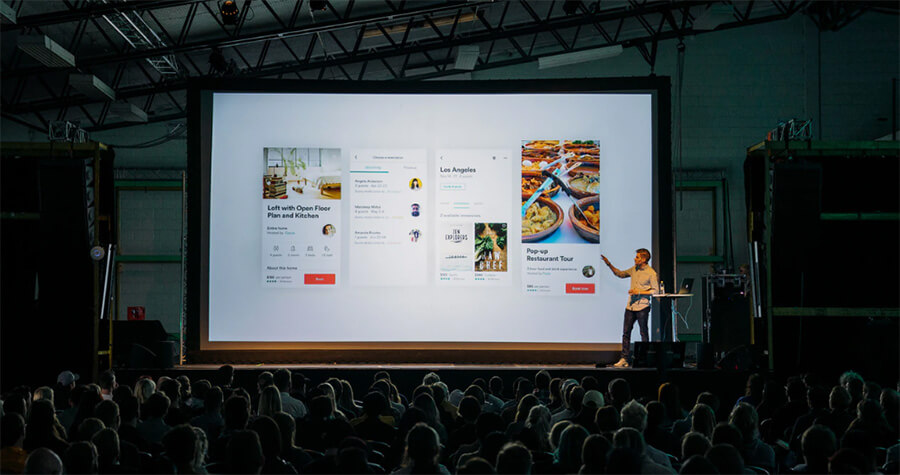 A blog can be a fantastic way to get your name out there, especially if you’re a strong and thoughtful writer.
If you want to build your personal brand–particularly if you’re aiming to be an author or speaker–then your blog could become a huge asset.
I know from first-hand experience. My blog has been directly responsible for getting multiple paid (and unpaid) speaking gigs to deliver presentations in front of hundreds of people. Because I share my experiences, insights and work to build thought leadership in my niche, that puts me on the radar for conferences and events looking to bring in speakers their attendees will recognize.
Starting a blog can also be a good way to dominate Google’s search results for your name (especially if, along with your blog, you also establish a social media presence).
Whether you want to impress a new potential employer, get a promotion at your current job, gain more media exposure or pave the way for pitching publishers on a potential book deal—your blog can be a great destination to showcase your expertise and perfect your personal brand.
Plus, you can get a jump start on growing your personal brand by learning how to write an eBook and begin generating revenue selling it to your own audience. As others consume your products, the word about your work should spread.
A blog can be a fantastic way to get your name out there, especially if you’re a strong and thoughtful writer.
If you want to build your personal brand–particularly if you’re aiming to be an author or speaker–then your blog could become a huge asset.
I know from first-hand experience. My blog has been directly responsible for getting multiple paid (and unpaid) speaking gigs to deliver presentations in front of hundreds of people. Because I share my experiences, insights and work to build thought leadership in my niche, that puts me on the radar for conferences and events looking to bring in speakers their attendees will recognize.
Starting a blog can also be a good way to dominate Google’s search results for your name (especially if, along with your blog, you also establish a social media presence).
Whether you want to impress a new potential employer, get a promotion at your current job, gain more media exposure or pave the way for pitching publishers on a potential book deal—your blog can be a great destination to showcase your expertise and perfect your personal brand.
Plus, you can get a jump start on growing your personal brand by learning how to write an eBook and begin generating revenue selling it to your own audience. As others consume your products, the word about your work should spread.
Good Reason #4: You Want to Make a Difference in the Lives of Others
While some would-be bloggers are focused on the difference blogging could make to their world, others are focused on how their blog could make a difference to the world itself (by positively impacting the lives of your readers). This doesn’t, of course, preclude the possibility of making money from your blog. Perhaps there’s a key message or idea you want to share—or your business has one that helps people in some way. For example, if you’re a life coach or you write about personal development, there can be positive ways to create win-win opportunities for both yourself and your readers. Every blog has the potential to make a difference in the lives of someone else. Even a blog that publishes light-hearted cartoons could really brighten someone’s day and even spark more meaningful conversations.Good Reason #5: You’d Like a New (and Hopefully Profitable) Hobby
 Although blogging can be a valuable business tool, some bloggers get started because they’re simply looking for a new hobby.
If you’re a writer or marketer by trade, then you might find blogging a great way to get your work in front of an audience—quickly and efficiently.
Depending on your circumstances, you might be keen to give blogging a try because you’re hoping it’ll make you some money.
To be clear, that’s a perfectly valid motivation too—you can enjoy writing articles and learning new technical skills while also building up a side income and figuring out how to best monetize your blog with good intentions.
Although blogging can be a valuable business tool, some bloggers get started because they’re simply looking for a new hobby.
If you’re a writer or marketer by trade, then you might find blogging a great way to get your work in front of an audience—quickly and efficiently.
Depending on your circumstances, you might be keen to give blogging a try because you’re hoping it’ll make you some money.
To be clear, that’s a perfectly valid motivation too—you can enjoy writing articles and learning new technical skills while also building up a side income and figuring out how to best monetize your blog with good intentions.
Good Reason #6: You Enjoy Learning New Things
When you become a blogger, you’re launching down a learning journey that’s pretty much never going to end. Technology moves on quickly. You might get to grips with a particular social network or website builder today, only to find that they introduce a bunch of new features tomorrow—or they go out of business and you’re left needing to find a new solution. As a blogger, you’ll learn a wide range of skills, including things like:- Coming up with ideas for blog posts, structuring and writing them
- The art and science of how to write a headline for your blog posts
- Editing and proofreading your posts and potentially (if you take guest blog posts) other people’s work too
- Sourcing images — plus resizing and editing them when necessary
- Using a content management system – likely WordPress, though there are other free blogging platforms you might explore too
- Marketing and promoting your blog (and potentially your business, if that’s the direction you go in)
- Writing product reviews and recommending processes to your readers (like my Bluehost reviews post, for example)
- Using social media — which might include using new blogging tools to schedule posts and manage your social media accounts
Good Reason #7: You Want to Build a Real Asset You Actually Own
This one’s become more important in 2026 than it used to be. When you build an audience on Substack, Medium, TikTok, YouTube, or Twitter/X, the platform owns the relationship. They can change the algorithm, demonetize you, throttle your reach, or shut you down — and there’s nothing you can do about it. A self-hosted blog is one of the few audience-building plays you actually own. You own the domain. You own the content. You own the email list. You own the URL space your traffic comes through. If a self-hosted blog hits the right traffic and revenue level, you can also sell it as a real digital asset — typically for 25-45x its monthly profit. (See my full guide on how to sell a blog for the playbook.) The trade-off is that self-hosting your blog takes a tiny bit of upfront setup (15 minutes and ~$3-$5/month for hosting). But for a real, ownable asset that compounds over years? It’s the cheapest digital business model on earth. If you want something you control — not something you rent from a platform that could change the rules tomorrow — that’s one of the strongest reasons to blog in 2026.5 Not So Great Reasons (Why You Shouldn’t Start a Blog)
While all the above reasons are great motivations to start a blog, there are plenty of other reasons why you might be thinking of getting into blogging. If any of these next few reasons ring true to you, I highly advise giving this all a little more thought before diving in. Don’t heed this advice and you’re much more likely to end up disappointed when your expectations aren’t met—or the going gets rough and you’re not deeply driven by why your blog exists in the first place.Bad Reason #1: You Want to Make Money Fast
 Let’s be honest, there are plenty of bloggers who get into this line of business primarily for the money—and I’ll be the first to tell you there’s nothing wrong with that.
It’s important to realize though, that blogging is not a “get rich quick” scheme (whatever some may want you to think).
Many bloggers—even successful ones like me—have spent many years growing their blogs before making it to the point where we’re generating a full-time income.
Instead…
Rather than seeing your blog as a way to bring in tons of money fast, see it as a crucial component of a larger online business.
Again, there’s nothing wrong with wanting to make money blogging—but instead of dreaming about a magical fountain of “passive income” pouring in for very little effort on your part, you need to make a plan about how exactly your blog is going to form a part of your business.
Let’s be honest, there are plenty of bloggers who get into this line of business primarily for the money—and I’ll be the first to tell you there’s nothing wrong with that.
It’s important to realize though, that blogging is not a “get rich quick” scheme (whatever some may want you to think).
Many bloggers—even successful ones like me—have spent many years growing their blogs before making it to the point where we’re generating a full-time income.
Instead…
Rather than seeing your blog as a way to bring in tons of money fast, see it as a crucial component of a larger online business.
Again, there’s nothing wrong with wanting to make money blogging—but instead of dreaming about a magical fountain of “passive income” pouring in for very little effort on your part, you need to make a plan about how exactly your blog is going to form a part of your business.
- Are you going to use affiliate links to promote other people’s products to your audience?
- Will you run advertising? (Keep in mind you’ll need a lot of traffic for advertising to be a viable income source.)
- Will you sell your own products or services? What kinds and why?
Bad Reason #2: You Want to Write About Your Life
There are an estimated 600+ million blogs on the internet today, but some of the earliest blogs were just simple online diaries (in fact, the word “blog” is a contraction of “weblog” — an online “log” of someone’s life). If the history nerd in you wants more, brush up on the top blogging terms too. There’s nothing wrong with writing about your life… but a blog may not be the best form for this. For instance, you may have privacy concerns, or you might simply find that not all that many people are interested in reading about the details of your day-to-day activities. If you’re hoping to make money blogging, then writing about your life is very unlikely to be the best way forward. Unless you’re a truly gifted writer (and have a particularly fascinating life), you’ll likely want a different medium to share every detail of your life—consider Instagram as a platform to double down on. Instead… You could pick a particular aspect of your life (perhaps one of your hobbies, or a particular situation in your life) to blog about. With this more concerted approach, you’ll be able to build up an audience of people interested specifically in that topic (i.e. learning how to find your target audience)—which will be easier to not only focus your offer, but to eventually monetize in a scalable way, since they’ll all share a certain number of commonalities with each other. As I’ve alluded to, if you really just want to talk about your life in general to an interested audience, consider using a platform like Instagram to see if you can build a following there as an influencer (having a knack for photography will help immensely). If you want to get all your thoughts down in writing, you might choose a more private medium—like journalling—instead of launching a blog that potentially anyone could discover, read and share.Bad Reason #3: You Read Lots of Blogs and it Looks Fun
 If you enjoy reading blogs, it makes sense that you might decide you want to start one for yourself. While this certainly isn’t a terrible reason on its own, it’s not really enough of a reason to justify throwing your hat into the competitive world of blogging by itself.
Committing to a blog is a lot of work (if you want to grow it). It’s a bit like saying that because you enjoy watching films, you want to become a director. Simply enjoying someone else’s work doesn’t necessarily mean you’ll enjoy the process of creating or working on a similar project, yourself.
Another danger here is that you could end up creating a blog that’s very derivative of the blogs you read.
It’s important to find your own angle and motivation for getting into blogging… otherwise your blog won’t have mucho of a chance of standing out from the crowd.
Instead…
Don’t feel that you “should” start a blog just because you see other people doing it (and making money at it). There might be a different outlet that would work better for your ideas, experience or particular skill set to achieve your most meaningful goals.
For instance, you might find it much easier to talk about your thoughts than to write them down—so maybe starting a podcast (you’ll need podcast hosting though) or launching a YouTube channel would suit you better.
You might also want to learn a bit more about the blogs you enjoy. Look at their About Me page or see if the blogger has done any interviews.
Find out how much work went into building what they’ve created—particularly in the early days.
There’s a good chance that what you see is just the tip of the iceberg and that there’s years of tireless effort driving their blogs to where they are today.
Don’t shy away from hard work—but do understand that blogging is more than simply writing, publishing and somehow magically earning an income.
If you enjoy reading blogs, it makes sense that you might decide you want to start one for yourself. While this certainly isn’t a terrible reason on its own, it’s not really enough of a reason to justify throwing your hat into the competitive world of blogging by itself.
Committing to a blog is a lot of work (if you want to grow it). It’s a bit like saying that because you enjoy watching films, you want to become a director. Simply enjoying someone else’s work doesn’t necessarily mean you’ll enjoy the process of creating or working on a similar project, yourself.
Another danger here is that you could end up creating a blog that’s very derivative of the blogs you read.
It’s important to find your own angle and motivation for getting into blogging… otherwise your blog won’t have mucho of a chance of standing out from the crowd.
Instead…
Don’t feel that you “should” start a blog just because you see other people doing it (and making money at it). There might be a different outlet that would work better for your ideas, experience or particular skill set to achieve your most meaningful goals.
For instance, you might find it much easier to talk about your thoughts than to write them down—so maybe starting a podcast (you’ll need podcast hosting though) or launching a YouTube channel would suit you better.
You might also want to learn a bit more about the blogs you enjoy. Look at their About Me page or see if the blogger has done any interviews.
Find out how much work went into building what they’ve created—particularly in the early days.
There’s a good chance that what you see is just the tip of the iceberg and that there’s years of tireless effort driving their blogs to where they are today.
Don’t shy away from hard work—but do understand that blogging is more than simply writing, publishing and somehow magically earning an income.
Bad Reason #4: You Want to Get Free Products and Comped Trips
You’ve probably seen bloggers posting about products they’ve received in order to review them—or even, in some niches, trips and experiences they’ve gotten for free. Perhaps you’d like to try out some nifty gadgets, or you’d love to relax on an all-expenses-paid weekend at the beach? While there certainly are freebies in the blogging world, the truth is that these mostly go to people with the traffic and influence to promote products successfully. Sure, it’s possible you could write a few pro bono reviews and score a handful of free business books to keep reviewing from publishers, or even get your hands on some products within your blog niche… but you’re highly unlikely to end up getting anything too valuable when you’re just starting out. It takes time to build influence and audience. Instead… Freebies can be a nice little perk. It’s best to see them that way, rather than to go into blogging with the main aim of getting free stuff. Focus on starting your blog and generating a real income from it. Then you can reach out to relevant brands to ask if they’re interested in providing free products or services for you to review. This way, you’re not building a business model that depends on free or discounted products—it’s more of a nice-to-have. Some blogging niches suit this better than others though. If you write about parenting for instance, you might actually be able to score some free toys or clothes. If you write about health and beauty, you could get some free supplements or makeup. You might also find that you can get free subscriptions to online courses or software tools if those are applicable to your niche, too.Bad Reason #5: You Think AI Will Write Your Blog For You
This is the new bad reason for 2026. Plenty of would-be bloggers are showing up thinking they can have ChatGPT write 100 posts, hit publish, and watch traffic roll in. It does not work. At all. Google’s March 2024 core update specifically targeted unhelpful, unoriginal AI-generated content at scale, and every update since has reinforced that direction. AI detectors flag the obvious patterns. AI search engines (ChatGPT, Perplexity, Google AI Overviews) actively prefer content with strong human signals — first-person stories, original data, distinctive opinions — over the generic AI-written stuff. If your blogging strategy is “let the robot do it,” you’ll be crushed by every blog with a real human behind it. Instead… Use AI as a tool, not a replacement. Tools like RightBlogger (the AI writing platform I built specifically for bloggers) can speed up outlining, editing, and research dramatically — but the strategy, the experience, the opinions, and the final voice all have to come from you. The bloggers winning in 2026 are the ones using AI to get more of their work done — not to replace themselves with a robot. If you’re not willing to put your real expertise and voice into the work, blogging probably isn’t the right move for you.8 Important Questions to Ask Yourself Before Starting a Blog
So you think you have some good reasons for starting a blog? Should you go ahead, or are you going to end up wasting your time (and potentially even your money)? Here are eight important questions to ask yourself (and spend some real time answering) before you even settle on a name for your blog, let alone actually launch into the nuances of getting your blog off the ground and starting to create content.Question #1: Have You Picked the Right Niche (Topic) to Blog About?
 There are blogs out there on every possible topic imaginable. Some bring in a very impressive annual income, but others are run purely as hobbies and lose rather than make money.
While there are a lot of factors separating successful blogs from the not-so-successful, your choice of niche (topic) is a crucial decision that’ll hugely affect your blog.
This isn’t about picking a great “money making” topic—while some topics can certainly be monetized more easily than others, what’s particularly crucial here is that you pick a topic that you’d love to write about for years to come, and one where you have at least a basis of experience to build upon and share.
Avoid picking a topic just because you’ve seen other blogs succeed with that topic.
For example, it’s extremely common for would-be bloggers to want to blog about “how to make money blogging,” because that ties in with the blogs they’ve been reading as they weigh whether or not they should start a blog for themselves.
While this is certainly a niche topic area that has strong potential for monetization, it’s also a crowded corner of the blogosphere—and you’re extremely unlikely to succeed in this niche unless you actually have some prior experience making money blogging.
Not to mention the fact that ethically speaking, you shouldn’t go around trying to teach others what you don’t yet know, yourself.
There are blogs out there on every possible topic imaginable. Some bring in a very impressive annual income, but others are run purely as hobbies and lose rather than make money.
While there are a lot of factors separating successful blogs from the not-so-successful, your choice of niche (topic) is a crucial decision that’ll hugely affect your blog.
This isn’t about picking a great “money making” topic—while some topics can certainly be monetized more easily than others, what’s particularly crucial here is that you pick a topic that you’d love to write about for years to come, and one where you have at least a basis of experience to build upon and share.
Avoid picking a topic just because you’ve seen other blogs succeed with that topic.
For example, it’s extremely common for would-be bloggers to want to blog about “how to make money blogging,” because that ties in with the blogs they’ve been reading as they weigh whether or not they should start a blog for themselves.
While this is certainly a niche topic area that has strong potential for monetization, it’s also a crowded corner of the blogosphere—and you’re extremely unlikely to succeed in this niche unless you actually have some prior experience making money blogging.
Not to mention the fact that ethically speaking, you shouldn’t go around trying to teach others what you don’t yet know, yourself.
Question #2: How Confident Are You With Technology?
While blogging platforms are mostly very user-friendly, and even the best WordPress themes don’t require any fiddling around with HTML or CSS code these days… it’s an undeniable fact that if you’re going to blog, you’re going to need to get comfortable with some slightly technical things. If you struggle attaching a file to an email, then you may struggle—or at least you’ll likely find that blogging has a steep learning curve. The good news is that there are lots of different blogging platforms out there, and even if you feel that one is beyond your skill set, you might find something else that’s easier to pick up. For example, if you don’t want to register a domain name and set up a monthly hosting plan from day one, using hosted WordPress offered by WordPress.com might be a sensible option that requires a lot less upfront work in order to get your blog online quickly—and it’ll be a lot less expensive than top of the line managed WordPress hosting plans. Even if the technical aspects of blogging feel daunting right now, remember that there are tons of guides and tutorials out there that can help (like what I provide for free here on my blog in the form of new content and videos every week). With blogging, you can experiment as much as you’d like without worrying about wasting valuable resources or doing any damage (it’s not like you’re sculpting marble or rewiring your house). You can set up a free “test” WordPress blog and experiment—if something goes wrong, it doesn’t matter. Just reverse your changes and start over again.Question #3: Will You Have Consistent Time and Energy for Blogging?
 Another inescapable fact of blogging, is that it takes up both time and energy.
Sitting down to write a blog post at the end of a busy day at work (or during the early mornings) might be the last thing you feel like doing.
While many bloggers do manage to succeed despite their busy lives, you need to be realistic about what you can do in the time you’ve got.
This might mean delaying the launch of your blog if you’ve got a busy day job and you’ve just had a new baby. You may want to hold off for a little while.
It could also mean setting small goals, like aiming to make $100/month by the end of your first year of blogging—not $10,000/month—if your life is very busy and you’ve got the patience to make this a deliberate practice for the years to come.
Another option, if you’re still driven to go dive into blogging, is to look at ways to free up more time and energy in your life. That might be something as simple as hiring a babysitter for a couple of afternoons a week so that you can write, or it could translate into discussing with your partner and other family members about how to split chores more evenly in order to carve out some more time for your blog during the evenings.
Keep in mind that you don’t necessarily need a lot of time to blog—five to ten hours a week might be more than enough if you’re happy publishing one or two posts each week and you’re not doing a lot of promotion yet.
Obviously though, the more time you can put in, the more quickly your blog will grow.
Another inescapable fact of blogging, is that it takes up both time and energy.
Sitting down to write a blog post at the end of a busy day at work (or during the early mornings) might be the last thing you feel like doing.
While many bloggers do manage to succeed despite their busy lives, you need to be realistic about what you can do in the time you’ve got.
This might mean delaying the launch of your blog if you’ve got a busy day job and you’ve just had a new baby. You may want to hold off for a little while.
It could also mean setting small goals, like aiming to make $100/month by the end of your first year of blogging—not $10,000/month—if your life is very busy and you’ve got the patience to make this a deliberate practice for the years to come.
Another option, if you’re still driven to go dive into blogging, is to look at ways to free up more time and energy in your life. That might be something as simple as hiring a babysitter for a couple of afternoons a week so that you can write, or it could translate into discussing with your partner and other family members about how to split chores more evenly in order to carve out some more time for your blog during the evenings.
Keep in mind that you don’t necessarily need a lot of time to blog—five to ten hours a week might be more than enough if you’re happy publishing one or two posts each week and you’re not doing a lot of promotion yet.
Obviously though, the more time you can put in, the more quickly your blog will grow.
Question #4: How Will You Make Money?
Let’s be clear about this—there’s no rule saying your blog has to make money. Most bloggers though, want to at least make enough money to cover their own costs (e.g. their hosting plan, or the cost of a premium WordPress theme for their blog). If you have an existing business, you need to get clear about how your blog is going to support it. For example, if you’re a freelance designer, your blog could be a form of content marketing that you can use to bring in potential clients—or it could be a destination to showcase your work and be a portfolio that you use to seal the deal with interested prospects. Too many bloggers start out with the idea that once they start getting enough traffic, they can quickly monetize those readers. Instead, it’s better to prepare for monetization from day one. Think through how exactly your blog is going to bring in money—will you run ads, promote Amazon affiliate products, validate the idea of selling your own products, work with sponsors, or use a mixture of different methods? Read through my ultimate guide about how to make money blogging for a step-by-step tutorial on monetizing your blog.Question #5: What Type of Content Will You Create?
 While you may think of written blog posts as the key form of content to be published on a blog, there are actually plenty of other options too.
You could publish video posts, you could run a podcast, or you could create graphic-heavy content such as infographics, do live video trainings, courses and more.
It’s important to think through what exactly you want to create, and whether you have the necessary skills and equipment.
If you’re not all that confident in your writing abilities, then you probably don’t want to base your entire blogging strategy around producing 1,500 word articles twice a week. If you can’t afford even a halfway decent mic, then podcasting might not be the right choice for you right now either.
While your content doesn’t have to be super-professional from day one, readers will expect a certain standard they’ve already been conditioned to.
Blog posts full of typos and rambling ideas, crackly podcasts that can barely be heard and videos that you’ve shot on an old phone—probably aren’t going to cut it.
While you may think of written blog posts as the key form of content to be published on a blog, there are actually plenty of other options too.
You could publish video posts, you could run a podcast, or you could create graphic-heavy content such as infographics, do live video trainings, courses and more.
It’s important to think through what exactly you want to create, and whether you have the necessary skills and equipment.
If you’re not all that confident in your writing abilities, then you probably don’t want to base your entire blogging strategy around producing 1,500 word articles twice a week. If you can’t afford even a halfway decent mic, then podcasting might not be the right choice for you right now either.
While your content doesn’t have to be super-professional from day one, readers will expect a certain standard they’ve already been conditioned to.
Blog posts full of typos and rambling ideas, crackly podcasts that can barely be heard and videos that you’ve shot on an old phone—probably aren’t going to cut it.
Question #6: How Will You Measure Whether You’re Succeeding?
There are plenty of different ways to “succeed” at blogging. If you’re not particularly motivated by the money, but you want to spread your ideas—you might decide that success is about the number of email subscribers you have on your list, or the amount of traffic you generate each month. If you’re hoping to quit your day job as a result of blogging, you’ll want to figure out how much money you need to make (don’t forget to allow for expenses and taxes), and look at how close you’re getting to that goal as the months go by. If you simply want to enjoy yourself blogging, then you probably won’t have an objective measure for this—you’ll just think about what you’re getting out of it and whether you’re having fun as you progress. Before you start your blog, think hard about what “success” looks like to you. Work out what metrics (if any) you’re going to track to see whether you’re making progress toward your goal.Question #7: What Are (and Aren’t) You Willing to Compromise On?
 There are so many things you can do as a blogger, that you can’t possibly do execute perfectly (all the time).
It’s worth thinking up front about the areas in which you’re willing to compromise, both with your blogging itself and with your life as a whole.
Perhaps you won’t compromise on the quality of your content—but you’re not bothered about replying to every comment on your blog.
Maybe you’d love to have a fully custom blog design, but you can’t afford it right now—so you’ll compromise by choosing a premium WordPress theme that you like and just commit to investing more of your own time into tweaking that theme.
When it comes to your life as a whole though, there might be touch areas you’ll need to compromise on, in order to free up more time, energy or even money to get your blog going (and growing).
Maybe you’re happy to ditch some of your other hobbies, at least temporarily, or you’re willing to stop dining out for a month or two in order to save some cash that you could spend on growing your blog.
There’ll likely be areas you definitely aren’t wanting to compromise on in your life, though. Perhaps you want to make sure you’re still spending plenty of time with your kids, or that you’re still eating well and heading to the gym regularly.
It’s worth thinking through these no compromise areas in advance, so you don’t end up inadvertently encroaching on them when your blogging life gets busier.
There are so many things you can do as a blogger, that you can’t possibly do execute perfectly (all the time).
It’s worth thinking up front about the areas in which you’re willing to compromise, both with your blogging itself and with your life as a whole.
Perhaps you won’t compromise on the quality of your content—but you’re not bothered about replying to every comment on your blog.
Maybe you’d love to have a fully custom blog design, but you can’t afford it right now—so you’ll compromise by choosing a premium WordPress theme that you like and just commit to investing more of your own time into tweaking that theme.
When it comes to your life as a whole though, there might be touch areas you’ll need to compromise on, in order to free up more time, energy or even money to get your blog going (and growing).
Maybe you’re happy to ditch some of your other hobbies, at least temporarily, or you’re willing to stop dining out for a month or two in order to save some cash that you could spend on growing your blog.
There’ll likely be areas you definitely aren’t wanting to compromise on in your life, though. Perhaps you want to make sure you’re still spending plenty of time with your kids, or that you’re still eating well and heading to the gym regularly.
It’s worth thinking through these no compromise areas in advance, so you don’t end up inadvertently encroaching on them when your blogging life gets busier.
Question #8: How Often Will You Publish New Content?
While this question may seem like a relatively minor detail when you’ve yet to actually launch your blog, it’s still helpful to pin down how frequently you plan to publish new content at this stage. If your planned blog niche requires you to write daily (i.e. you want to have a blog about the latest Apple news), that probably isn’t going to work out so well if your lifestyle involves long hours at your day job most weekdays. There’s no right answer about how often you should publish content. Most bloggers would agree that what’s really important is that you publish high-quality content, even if that means only publishing one piece every couple of weeks. If you can be an invaluable resource, even to a small number of readers, then you’ve got the foundation for a blog that has potential to grow and become profitable. By figuring out your content publishing schedule up-front, you can plan for things like how many interviewees you need to line up for your podcast, or how many blog post outlines you need to draft and kick off on a monthly basis.Should You Start a Blog? Making the Final Decision
 Blogging in 2026 isn’t for everyone — but it’s still one of the cheapest, highest-leverage businesses you can launch on the side. The trade-off: it takes time, real expertise, and the willingness to give it 12-18 months before you see meaningful results.
If you have a topic you genuinely care about, a few hours a week, and the patience to play the long game — start the blog. The bar is higher than it used to be (AI raised it), but the upside is also bigger (AI search engines now actively cite human-authored expertise, which means owning a real blog with E-E-A-T signals is more valuable than it’s been in a decade).
If you don’t have a clear topic, the time, or the patience — there’s no shame in waiting, or picking a different path. There are tons of other ways to build a business or side income:
Blogging in 2026 isn’t for everyone — but it’s still one of the cheapest, highest-leverage businesses you can launch on the side. The trade-off: it takes time, real expertise, and the willingness to give it 12-18 months before you see meaningful results.
If you have a topic you genuinely care about, a few hours a week, and the patience to play the long game — start the blog. The bar is higher than it used to be (AI raised it), but the upside is also bigger (AI search engines now actively cite human-authored expertise, which means owning a real blog with E-E-A-T signals is more valuable than it’s been in a decade).
If you don’t have a clear topic, the time, or the patience — there’s no shame in waiting, or picking a different path. There are tons of other ways to build a business or side income:
- 101 Best Side Businesses to Start While Working Full-Time
- 65 Genius Ways How to Make Money Online Legitimately (on the Side)
- Blogging jobs and WordPress developer jobs if you want to work in the space without running your own blog
FAQ: Should I Start a Blog?
Is blogging still profitable in 2026?
Yes — but the model has shifted. Generic AI-written content gets nowhere. Bloggers who build real expertise, own their email list, and earn citations from AI search engines (ChatGPT, Google AI Overviews, Perplexity) are doing better than ever. The high end of the blogging income spectrum has actually grown in 2026 because the noise filtered out the hobbyists. See my guide on how to make money blogging for the methods that actually work right now.
How long until a blog makes money?
Realistically, 12-18 months for a serious self-hosted blog with consistent publishing. Some bloggers see meaningful affiliate or ad revenue within 6-9 months in less competitive niches. The biggest mistake new bloggers make is expecting income within 90 days — that’s not how the SEO + content compounding curve works. Plan for the long game, monetize from day one, and reinvest early traffic into list-building.
Will AI replace bloggers?
Not the good ones. AI replaces generic content — it doesn’t replace lived experience, original opinion, real interviews, or audience trust. Google’s ranking systems and AI search engines actively reward content with strong E-E-A-T signals (Experience, Expertise, Authoritativeness, Trustworthiness), all of which require an actual human behind the work. If anything, AI made real bloggers more valuable by drowning out the mediocre ones.
Should I use Substack instead of a blog?
Substack is great for newsletter-first writers who want fast distribution and an instant payment system. But you don’t own the platform, you don’t own the URL, and you don’t fully own the relationship with subscribers. Most serious bloggers I know run a self-hosted blog as the primary asset and use a newsletter (Substack, Beehiiv, ConvertKit, etc.) as the distribution layer. That way you own the domain and the email list, and the newsletter sends people back to your blog where you have full SEO + monetization control.
How much does it cost to start a blog in 2026?
Around $3-$5 per month for hosting, plus $0-$15 for a domain (most hosts give you a free domain for the first year). That’s the bare minimum. Optional adds: a premium WordPress theme ($30-$80 one-time), an email service ($0-$30/month depending on subscriber count), and any AI writing tools you want to use. Total realistic startup cost: under $50 for the first year. See best web hosting plans for current pricing.
What should I blog about if I don’t know my niche yet?
Start with the intersection of three things: (1) topics you have actual experience or strong interest in, (2) topics with real audience demand (people are searching for it), and (3) topics with monetization paths. Don’t pick a niche purely because it looks profitable — you won’t stick with it. Don’t pick one purely because you love it — you might never make money. The sweet spot is the overlap. My full how to pick a blog niche guide walks through the framework I use.
Is it too late to start a blog in 2026?
No. People have been saying it’s too late since 2014, and bloggers have continued making it big every single year since. What has changed is the bar — you can’t coast on mediocre content anymore. But if you’re willing to actually build expertise, publish consistently, and play the long game, the field is wide open. The hobbyists got filtered out by AI. That left more room for serious bloggers.
Final Thoughts on Whether You Should Start a Blog
If you’ve made it this far, you probably already know your answer. The people who genuinely shouldn’t start a blog usually figure that out in the first 1,000 words. The people who should are the ones still asking themselves how to make it work. If you’re in the second group: start now. Pick a topic you actually care about. Set up a self-hosted blog (it takes 15 minutes). Publish your first post. Use tools like RightBlogger for outlining and AI assistance, and free utilities like my grammar fixer and paraphrase tool to clean up your drafts. Read up on the E-E-A-T content guidelines so you understand what AI search engines reward. And give yourself 12-18 months before you start judging the results. For the full step-by-step playbook on getting your blog live, growing traffic, and monetizing — head over to my complete guide on how to start a blog. Everything you need is in there, and it’s all free.Ready to Start Your Blog Today?
Check out my ultimate guide How to Start a Blog (on the Side).

I have started my blogging website 4 months back and your posts are really useful in providing me with the right direction an motivation. Keep up the good work!
Love hearing that, Faraz! Thanks for sharing and keep up the good work 🙂
Hi Ryan,
Sincerely, this is very impressive. More grace to you. My challenge is that I’m a Nigerian also resident in Nigeria. May I ask, how easy is it to start blogs. I’m not a quick money pursuer (although money is one of my motives). I have passion for writing and I have topics to write on. But I’m doubting if I can succeed as a blogger in Nigeria or as a Nigerian blogger. Please, I need your advice.
Thanks
Felix
That’s a great question, Felix. Why do you feel that being based in Nigeria would hold you back from being a blogger? From what I can see, there are a lot of people online in Nigeria who want to learn new skills… do you have any particular skills or experiences that you could use to connect with some of those people (using your blog as a vehicle for that connection) and thus help them in some way?
Ultimately, a blog should be used as a tool to help others in some capacity… so if you can find a way to do that in a niche/industry you care about, then you’re onto something.
Hi Ryan! Thanks so much for your wonderful and very relevant content. I admire what you’ve done for yourself. Keep it up!
I started my blog a year ago. I can’t say I’ve been very dedicated to it, mainly because I’ve felt discouraged. I know my content and ideas are good but I’ve just never been the one to attract attention or popularity, or socially exceed.
How can I get past that and be able to build a following and get my work out there?
You’re welcome! I’m glad you found my content.
My advice would be to find ways to lean into the strengths you already have (rather than try and force yourself to be too much of an extrovert if that’s not your natural disposition). Much can be said about the benefits of doing experiments to push yourself out of your comfort zone sometimes, but I’d encourage you to find ways that you can cater to an audience of people who identify with having the same/similar tendencies.
It’s hard to give actionable advice without seeing your actual blog, but if there are ways you can curate your content to be more specifically for a niche community that you’re a member of, then that’d a very good starting point… read through my guide on picking a smart niche for your blog and see if that sparks any inspiration for you: https://www.ryrob.com/blog-niche/
Great summary. I think blogging is an amazing way to build a brand (like my speaking biz) but it comes with tons of work.
Oh, 100% agree with you there. But hey, doesn’t any path to building a great personal brand require a lot of work? 🙂
great article , thanx a lot you just gave me some good knowledge ..i started my blog before a month and i keep reading about this subject to make my blog better ..i think your blog is the best place to find informations in the blogging niche
Glad to hear that! Keep up the consistent work 🙂
You blogs are gold! I can’t wait to start my blogging journey now! Definitely my favorite. I have followed many bloggers before but felt like they were just making money, whereas you genuinely care for your followers!
Kudos!
Ah, thanks for the kind words Ruth! I’m glad that’s clear to you 🙂
Good luck with your blog—and please feel free to stay in touch with any questions I can help answer as you build momentum.
Dear Ryan,
This is such a useful article.
You have clearly highlighted the investment required for making a blog successful. Investment in terms of commitment of time, energy and also finances.
Most of the bloggers (the bulk of them at least) tend to get disheartened in the initial stages of blog creation because their expectations are not aligned from the beginning.
I always get a reassuring feeling of knowing you have the best interests of your readers at heart while reading your articles.
Ah, I’m so happy to hear that Surabhi! Glad you’re finding all these resources useful & can feel that it comes from a genuine place 🙂
Hi Ryan, Honestly this is my first and biggest opportunity I have ever had in my life
However I have not started it yet but I am grateful to God for your life for being so much blessings to me,at least a have some kind of hope to do something for my life.
Bless you Ryan
Thanks
You’re welcome, Edmund. Good luck with your blog once you get started 🙂
Your blog is a full of engaging content and I like your blog too much. Thank to share your experience and you expertise with people’s start their journey for their inline business.
You’re welcome, Rohit! Good luck with your blog as well.
This is a great post Ryan, literally covered every single point for a beginner and exp blogger in every field. So true blogging is not for everyone. My reason is always Good Reason #6: You Enjoy Learning New Things. Rest points come on the way to grow more.
Nice! That’s awesome to hear, Bhawana—I’m pulling for you with your blog 🙂
I love your blog so much, it is so true and informative. I like that your blogs are not too formal it feels like a friend is giving advice to you.
Dang, that’s a really kind complement. Thank you very much, Sakshi 🙏
Blogging is a powerful tool to connect with your customers and prospects. It’s also an easy way to stay on top of your industry, build authority, and drive traffic to your site.
Agreed! 🙌