
If you’re thinking of starting a blog or getting back into blogging, you might be wondering… what should I start a blog about?—or if this isn’t your first rodeo, which blog topics you should pursue this time. Enter: My guide to choosing the right blog topic ideas.
It can be tough to settle on a topic or even a blog name at the start of your blogging journey. Maybe you have lots of ideas, and you want to blog about everything. Or maybe you don’t mind what you blog about, but you want to be able to make money blogging one day, and you’re not sure which blog topics are likely to be most profitable.
So many bloggers put off starting their blog because they can’t decide on a topic. But the top blogging advice from successful bloggers concludes that the longer you wait, the more likely it is that someone else will jump in and start a topic in the exact niche you wanted to conquer. More importantly, you don’t want to be sitting here at the same time next year… wishing you’d started today.
In this guide, I’ll help you pick the right topic to start a blog about. If you’re looking for inspiration on individual blog topics, try out my free blog idea generator tool & check out my list of 200+ blog post ideas to inspire your writing today.
15+ Best Blog Topic Ideas for 2026: What Should I Start a Blog About?
- Why Does Your Blog Need a Topic?
- Blog Topic Ideas to Inspire New Bloggers (7 Examples)
- Choosing a Blog Topic Idea That’s Right for You (What to Blog About)
- Low-Risk Ways to Test Out Your Blog Topic Ideas
- Starting a Blog With Your Own Unique Spin on an Existing Topic
Disclosure: Please note that some of the links below are affiliate links and at no additional cost to you, I’ll earn a commission. Know that I only recommend products and services I’ve personally used and stand behind. When you use one of my affiliate links, the company compensates me, which helps me run this blog and keep my in-depth content free of charge for readers (like you).
Ready to Start Your Blog Today?

Check out my ultimate guide How to Start a Blog (on the Side) that’s been featured on Forbes, Inc and Entrepreneur.
Why Does Your Blog Need a Topic?
You might wonder why your blog needs a topic at all. After all, it’s your blog! Can’t you just write about whatever blog post ideas pop into your head on a given day?

Well, you absolutely can do that. There’s no rule saying you can’t. And if you have a personal blog that’s a creative outlet or a space to share what’s on your mind with friends and family, then that’s great. You should write about anything that inspires & energizes you!
But if you want to make money from your blog, build an audience for your work or build a blog business plan to execute on… you need to pick a clear blog topic to focus on.
Readers Want One Clear Blog Topic
Think of it this way: Your favorite blogs probably stick to one main topic (even if it’s a broad one). If you love reading about travel, you might give up on a supposedly “travel” blog that has constant posts about completely different topics like credit cards, getting fit, or the blogger’s complicated family drama.
Of course, your readers will be interested in more than one thing, just like you. But they’ll come to your blog expecting a specific type of content.
A Blog Topic Makes Blogging (and SEO) Easier for You
From your point of view, having a topic makes blogging a lot easier, too. If you can write about anything, it can be hard to come up with blog post ideas that seem good enough. But if you’re sticking to a topic, having that limit in place can make it easier to brainstorm ideas for your blog posts.
Side note: If you’re looking for individual blog post topic inspiration, try my free AI-Powered Blog Title Generator Tool to get dozens of SEO-friendly topic ideas to make your blog posts stand out today.
Having a clear topic also makes SEO (search engine optimization) easier, as search engines like Google consider how relevant your blog as a whole is to a search query—not just the individual pages.
Your topic will also influence things like your blog theme (the right WordPress themes give you a lot of design and blog layout options), what you put in your sidebar, and pages like About and FAQs on your blog.
Ready to Start Your Blog Today?
Check out my ultimate guide How to Start a Blog (on the Side) that’s been featured on Forbes, Inc and Entrepreneur.
What’s Different About Blog Topics in 2026
Before we get to the topic ideas themselves, a few things changed in the blogging landscape over the last couple years that shape which niches actually work in 2026:
- AI commoditized generic content. Generic “how to lose weight” or “10 best laptops” blog posts can be cranked out by ChatGPT in seconds. Google’s helpful content updates filter out the lazy AI versions, but the bar on basic informational content went up dramatically. The niches that still work in 2026 are the ones where lived experience, specific expertise, or personal authority can’t be faked.
- Specialist niches got more valuable. “Personal finance” is more crowded than ever. “Personal finance for new freelancers” or “FIRE strategies for high earners in tech” still has room. The same pattern holds across every traditional niche — the broader you go, the harder it is to break through. Narrow niches are the 2026 play.
- AI search engines (ChatGPT, Perplexity, Google AI Overviews) reward author authority. They cite content with real E-E-A-T signals — Experience, Expertise, Authoritativeness, Trustworthiness. Which means a blog by an actual nurse will outrank a faceless “health blog” in 2026. Pick a topic where you have (or can build) real authority.
- New niches emerged. AI tools, mental health, the creator economy, sustainability, and niche hobbies all grew dramatically as blogging categories in 2024-2026. The 7 traditional niches below still work — but a handful of newer niches are wide open if you have relevant experience.
The shortcut: pick a niche where you have real interest and real experience, then niche down within it. The 15 topic ideas below cover both traditional winners and the modern niches I’d be most excited to start a blog in today.
15+ Best Blog Topic Ideas for 2026 (with Real Examples)
There are lots of great blog topics you can write about if you want to make money. Some perennially popular niches are:
1. Personal Finance Blogging
Interested in money? Personal finance blogs are a great way to share your ideas and tips—and they can also prove lucrative. Lots of people are searching for help with common personal finance issues, like getting out of debt, saving for a house, and sticking to a budget—all fantastic blog post ideas, by the way.

You could monetize this type of blog by offering spreadsheets or templates for download through affiliate marketing, advertising, online courses, and more.
Examples of Successful Personal Finance Blogs
- Mr. Money Mustache: This popular blog is distinctive for its no-nonsense tone and focus on making enough money (and reducing expenses sufficiently) to no longer need a day job.
- Money Under 30: This blog targets under-30s and provides beginner-friendly articles on a wide range of personal finance topics (including debt, budgeting, credit, and more).
2. Travel Blogging
While you might think the market is saturated for travel blogs, there’s always room for a fresh perspective or a different angle on your travel experiences. You might write about solo travel, travel adventures with young kids, or budget-friendly travel. Travel bloggers can score free trips and gear depending upon the type of blog posts they craft, too.

You could easily turn your travel blog traffic into money through affiliate marketing posts where you share top travel gear, roundups of your favorite hotels (or airlines), gifts for hikers (one of my best blog posts there), and much more.
Examples of Successful Travel Blogs
- Notes from the Road: This blog focuses on first-hand experiences and shares sketches and photos. It aims to “be written merely for the joy of curious explorers and travelers.”
- Hike With Ryan: My travel blog! Rather than covering a huge range of types of travel on this blog, I stay focused on one of my favorite activities—hiking.
3. Food Blogging
Whether it’s a blog where you share your Grandma’s recipes, a collection of posts for people who want to eat great food while losing weight, or a blog celebrating different foods from around the world, you can find your own approach and voice on a food-related blog. For more on getting off the ground in this niche, check out my guide to starting a food blog.
Many food bloggers sell collections of their recipes, share behind-the-scenes video content, and answer common questions readers have—and you could also host blog advertisements using Google AdSense as a monetization starting point. Just be sure your blog content strategy takes this all into account.
Examples of Successful Food Blogs
- Wandercooks: This great blog shares cuisines, cultures, and recipes worldwide. It’s packed with recipes – which include variations and substitutions, too.
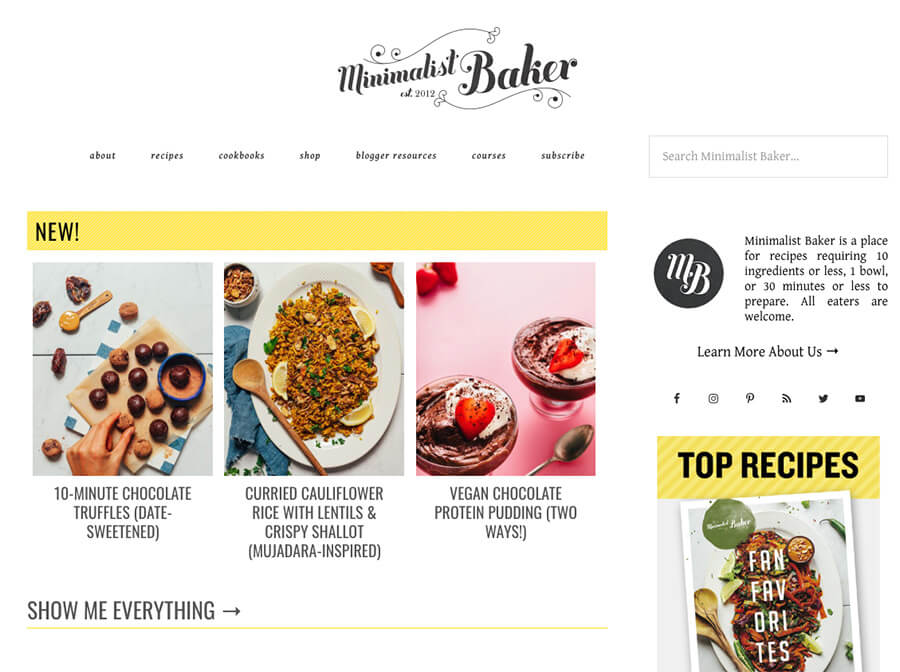
- Minimalist Baker: As you might expect from its name, this blog shares straightforward recipes, many of which are vegan or gluten-free.
4. Self-Improvement Blogging
The self-improvement niche is huge, covering all sorts of topics like time management, personal growth, strengthening relationships, and much more. While there’s already plenty of tried-and-true advice out there, you might be able to bring a fresh approach.
There are lots of ways to monetize a self-improvement blog. Online courses are particularly popular in this niche, as well as subscription newsletters that can share in-depth takeaways from recent experiments in your life, open letters to your readers, roundups of the most popular blog content in your niche, and more.
Examples of Successful Self-Improvement Blogs
- Marie Forleo: Hugely popular and famous for B-School, Marie Forleo’s blog deals with topics like sleeping better, overcoming fear, believing in yourself, and much more.
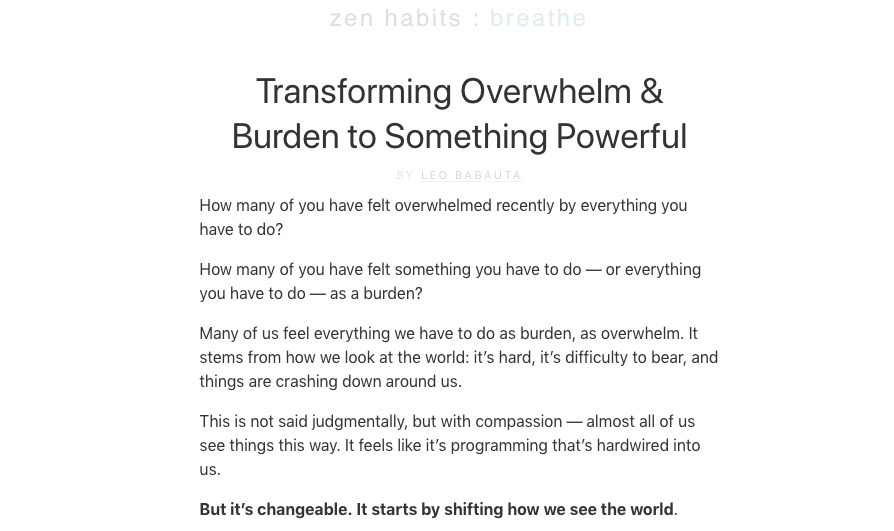
- Zen Habits: This long-running blog has a deliberately minimalist and calming website and thoughtful and in-depth articles covering a wide range of self-improvement topics.
5. Health and Fitness Blogging
Most of us have some level of interest in health and fitness. Whether you’re blogging about becoming a super-fit bodybuilder or about simply losing weight and enjoying running around with the kids, a health and fitness blog could reach a huge audience.

Use Google Analytics to pinpoint the most popular posts on your health and fitness blog, then consider these as an opportunity to promote your ebook, online course, or affiliate partners. You can also monetize a fitness blog by doing things like selling cheat sheets for maximizing your time at the gym (which will also give you great content ideas by seeing which topics are most popular), cooking hacks for fast, high-protein meals at home, and more.
Examples of Successful Health and Fitness Blogs
- Nerd Fitness: This clever fitness blog focuses on making fitness fun and includes plenty of geeky references.
- No Meat Athlete: Another fitness blog focusing squarely on a specific audience, No Meat Athlete is about fitness for vegans.
6. Small Business Blogging
The number of small businesses in the USA grows each year. In the wake of the “great resignation,” more and more people are turning to blogs that help with business ideas, setup, growth, marketing, and logistics.

Small business blogs often sell their own products/services for business owners—but they can also make great money as affiliates for web hosting providers, WordPress plugins, business apps and other useful tools for supporting small business ideas. Check out my ultimate guide to starting a business on the side of your day job for an example to inspire you—it’s a great blog post that features an infographic, compiles real-world advice, uses me as a case study, offers step-by-step guidance, and more.
Examples of Successful Small Business Blogs
- Side Hustle Nation: One of my favorite side hustle blogs, Side Hustle Nation covers various topics related to running a side business, investing, and more.
- Shopify: The Shopify blog is packed with useful advice on running an eCommerce business and inspiring and helpful personal stories from Shopify users who’ve used digital marketing to grow their businesses.
7. Parenting Blogging
New parents might be up at all hours searching for advice—and parents facing a new stage, like elementary school, the teen years, or an empty nest, will also turn to the internet for advice. Whatever stage of parenting your blog deals with, you’re likely to find a readership.
This type of blog can be a little harder to monetize, but affiliate marketing is likely to do well here: parents always need more gear, DIY tutorials, and toys to entertain their children! New content like frequently asked questions (FAQ) segments and listicles do really well with this audience of time-strapped readers.
Examples of Successful Parenting Blogs
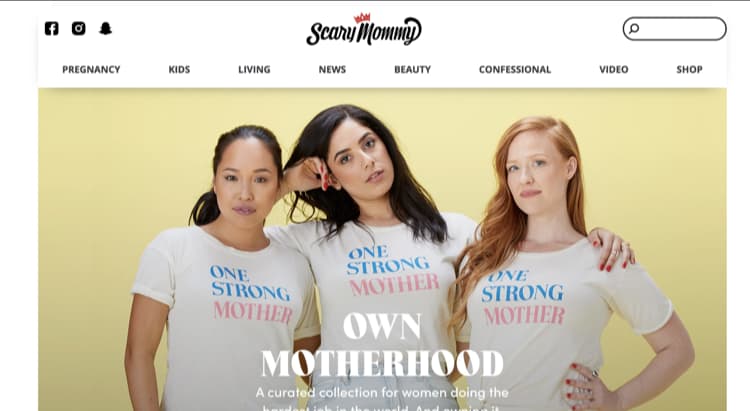
- ScaryMommy: A huge, multi-author blog that tackles all aspects of parenting; its laid-back and relatable first-person tone helps create its very recognizable brand.
- A Fine Parent: A positive parenting blog, with thoughtful and well-researched content from a wide range of guest writers, covering lots of parenting topics all from the same broad parenting philosophy.
While these seven blog topic ideas are far from the only topics you could start a blog about today, they’re some of the most proven niches for building an audience & a profitable online business. For even more ideas and inspiration, check out my list of 60+ profitable blog niches to consider this year.
Ready to Start Your Blog Today?
Check out my ultimate guide How to Start a Blog (on the Side) that’s been featured on Forbes, Inc and Entrepreneur.
8. AI Tools & Productivity Blogging
This niche barely existed three years ago and is now one of the fastest-growing blog categories on the internet. As AI tools proliferate, people desperately need help figuring out which ones are actually useful for specific workflows. If you have a tech, marketing, or productivity background, this is a wide-open space in 2026.
The niche works particularly well because: (1) tools change weekly, so evergreen “best of” lists need constant updating (creating recurring traffic), (2) affiliate programs are generous (many AI tools pay 20-30% commissions), and (3) the audience pays for quality reviews because tool decisions affect real productivity.
Examples of Successful AI Tools & Productivity Blogs
- Ben’s Bites: Daily AI newsletter and blog covering the latest AI tools and use cases.
- The Neuron: AI news and tool roundups for marketers and business owners.
- Futurepedia: A directory and review site for AI tools across every category.
9. Mental Health & Wellness Blogging
Mental health blogging exploded post-pandemic and has remained one of the most-searched, most-engaged blog categories in 2026. If you have lived experience navigating anxiety, depression, ADHD, burnout, therapy, or any specific mental health journey — and the willingness to write about it honestly — readers are looking for content that feels real, not clinical.
The monetization plays here: courses, journals and workbooks, affiliate partnerships with therapy platforms (BetterHelp, Talkspace), book sales, and one-on-one coaching. Be careful about YMYL (Your Money or Your Life) content rules — Google holds health/mental health content to a higher quality and authority bar. Real credentials or lived experience matter.
Examples of Successful Mental Health Blogs
- Tiny Buddha: Wisdom-focused mental wellness blog by Lori Deschene.
- Psych Central: Long-running mental health content site, now part of Healthline.
- The Mighty: Community-driven blog covering specific health and mental health journeys.
10. Side Hustles & Creator Economy Blogging
The creator economy has its own thriving content ecosystem in 2026 — blogs that cover side hustles, freelancing, content creation as a business, newsletter operators, and the broader “how to make money on the internet” space. This is the niche I built ryrob.com in, so I have some bias, but the opportunity here is real if you have actual experience to share.
What works: case studies (your actual side hustle income), tool reviews (huge affiliate revenue from CRM/email/hosting tools), specific tactical guides, and your own course or community as the eventual product. The audience converts well because they’re literally looking for ways to make money.
Examples of Successful Side Hustle / Creator Economy Blogs
- Side Hustle Nation: Nick Loper’s deep library of real side hustle interviews and case studies.
- The Hustle: Newsletter-first business and entrepreneurship coverage.
- Creator Wizard: Tactical guides for the modern creator economy.
11. Sustainability, Climate & ESG Blogging
Sustainability content has grown into a mature niche in 2026, with audiences interested in zero-waste living, ethical fashion, climate news, sustainable investing, ESG corporate analysis, and renewable energy. Brand partnerships in this space tend to be values-aligned (sustainable brands actively want to partner with sustainability creators), which often means higher rates than typical affiliate work.
The sub-niches here are wide open: sustainable parenting, climate-tech reviews, plant-based eating for athletes, ethical investing for beginners, zero-waste home renovations, etc. Pick one specific lane rather than trying to cover the whole sustainability umbrella.
Examples of Successful Sustainability Blogs
- Treehugger: Long-running sustainability and green-living publication.
- Sustainable Jungle: Practical sustainable lifestyle and product reviews.
- Going Zero Waste: Kathryn Kellogg’s deeply personal zero-waste lifestyle blog.
12. Niche Hobbies Blogging
The most underrated category on this list. Niche hobby blogs (pickleball, sourdough baking, woodworking, vintage watches, mechanical keyboards, foraging, model trains, specific crafts) consistently outperform broad niches because the audience is enthusiastic, the affiliate gear is high-margin, and AI-generated content does poorly against real practitioners.
The math works because hobby enthusiasts spend serious money on gear and instruction, and they trust recommendations from real practitioners over generic listicles. If you have a deep hobby you’ve practiced for years, the blog basically writes itself — and the audience is grateful because most “best gear” content in their niche is shallow.
Examples of Successful Niche Hobby Blogs
- The Wirecutter (for specific categories): The gold standard for hands-on review depth.
- True Cooks: Sourdough and bread baking, beautifully specific.
- The Wood Whisperer: Marc Spagnuolo’s woodworking community and content.
13. Pet Specialization Blogging
Generic “pet blogs” are saturated. Specialized pet blogs (specific breed care, exotic pets, senior dogs, dog training for reactive dogs, cat behavior, raw feeding) still have huge open space. Pet owners are uniquely passionate buyers — affiliate revenue per visitor in pet niches consistently outperforms most other consumer categories.
The play: pick a breed, behavior, or specific pet need and own it. “How to train a reactive Border Collie” or “Senior dog nutrition” or “Bengal cat behavior” all have enthusiastic audiences and very little real expert-level competition.
Examples of Successful Pet Blogs
- Rover Blog: Pet care content tied to a major pet-sitting platform.
- The Dogist: Photography-driven dog blog with massive audience engagement.
- Modern Dog Magazine: Established dog-focused publication.
14. B2B SaaS & Tool Reviews Blogging
One of the highest-revenue-per-visitor blog niches in 2026. B2B software tools (CRMs, project management, marketing platforms, dev tools, HR software, accounting) pay generous affiliate commissions — often $50-$500+ per customer signed up. The audience is small but very high-intent: they’re literally researching software to buy.
The bar is higher than consumer blogs because B2B buyers expect deeply researched comparisons, real screenshots, and honest pros/cons. If you have a technical or business background and can write detailed software reviews, this niche compounds dramatically.
Examples of Successful B2B SaaS Review Blogs
- G2 Learning Hub: Content arm of the major B2B software review site.
- Capterra: Long-form B2B software comparison and review content.
- Tool Tester: Independent reviews of marketing and business tools.
15. Caregiving & Aging Blogging
An underserved and rapidly growing niche. The aging population, the rise of family caregivers, and the practical and emotional challenges of caring for aging parents have created huge demand for content — and the niche is still surprisingly underdeveloped. If you have personal experience as a caregiver, working in senior care, or navigating the aging journey yourself, this is one of the most open niches available in 2026.
Monetization works through affiliate partnerships with caregiving products, medical alert systems, senior-focused services, courses for caregivers, and consulting. The audience is loyal and grateful because much of the existing content in this space is either institutional or generic.
Examples of Successful Caregiving & Aging Blogs
- Senior Planet: Lifestyle and tech content for older adults.
- The Caregiver Space: Community-driven content for family caregivers.
- Daughterhood: Anne Tumlinson’s blog and community for adult daughters caring for parents.
Choosing a Blog Topic Idea That’s Right for You (What to Blog About)
By now, I hope it’s clear that there are lots of different topics you could write about—and make money doing it.
Instead of trying to pick the most profitable blog niche or the one that you think will be easiest to search engine optimize, I’d recommend that you focus on the topic that’s the best fit for you.

The truth is, there isn’t one single blog topic that’s likely to outperform all others. Two factors that make a huge difference to whether a blogger succeeds in making money online and going full-time as a blogger are:
- How long does that blogger stick with blogging? It could take at least your first year to start seeing significant results.
- How much hard work the blogger puts in: High-quality blog posts that come out every week will always do better than half-hearted posts at irregular intervals.
With these factors in mind, what’s really important for a successful blog is that you choose blog topic ideas that you want to blog about for the long term—something you truly care about and have a real interest in.
To find that sweet spot of blog topic ideas you’ll be motivated about (and avoid writer’s block), ask yourself questions like:
- What do you love to talk about with friends?
- What do you do in your free time?
- What’s your day job—and do you enjoy it?
- What successes have you had in life?
- What type of writing would you like to do—i.e., tutorials vs personal essays?
- Is this your first blog or a new blog? (If it’s not your first blog, why didn’t your first blog work out?)
Your answers to these questions could help you figure out what to blog about (and answer that tough question, what should I start a blog about? in a very natural way).
Ready to Start Your Blog Today?
Check out my ultimate guide How to Start a Blog (on the Side) that’s been featured on Forbes, Inc and Entrepreneur.
5 Low-Risk Ways to Test Out Your Blog Topic Ideas
By now, you might have a blog topic you’d like to write about. But how can you be sure it will make you a successful blogger? Here are some low-risk ways to test your blog topic ideas (for newbies) and see if they can take you to the next level:
1. Look at the Existing Market (Competitor Blogs)
Are there other blogs—and books, magazines, podcasts, videos, and other resources—that are already popular when it comes to covering your blog topic ideas? The more you can find, the more popular the blog topic is.

You’ll also want to see what products or services are being sold related to your topic. Google, Amazon, and YouTube are great places to search for existing content related to your topic idea.
2. Join Facebook Groups or Forums Like Quora
Look for online groups dedicated to your topic—perhaps Facebook groups, web forums like Quora, or other niche communities. These are great places to see what beginners are asking about regarding the blog topic ideas you’re mulling over. You can learn about the latest trends in your topic area and build connections with other people interested in your blog.
3. Write on Medium About Your Topic
You might enjoy reading about a topic or chatting about it… but will you enjoy writing about it at length? A great way to find out is to write a few posts on Medium, perhaps a list post and a step-by-step guide. It’s free to publish on Medium, and thousands of people can read your articles.
4. Write a Guest Post for a Blog on Your Topic
Another good option is to look for a large blog related to your topic that takes guest posts. Take, for example, this guest post I wrote for the Buffer social media blog back in 2015 when I was a relatively new blogger—it got me a massive spike in traffic (that validated my blog topic ideas had real audience interest). It gave me a major credibility boost in my industry.
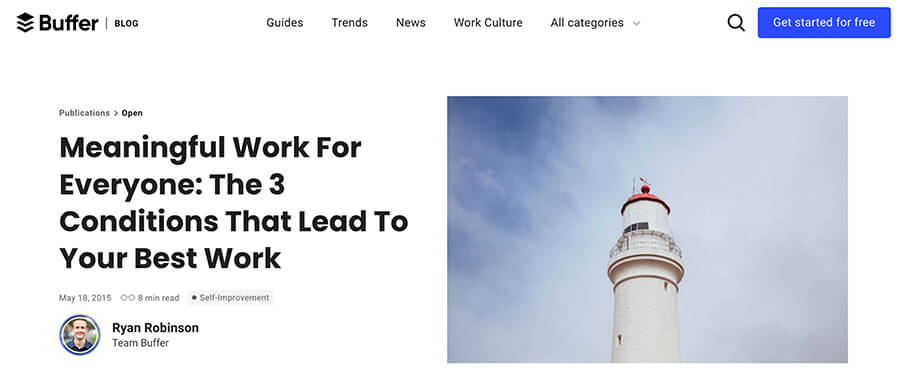
Write a piece for them about one of your success stories, and hopefully, it’ll be published—and you’ll get feedback in the form of comments, social media mentions, and so on. (Another option is to write a short piece for an established blog’s email list.)
5. Create a Free or Low-Cost Blog (e.g. With WordPress.com)
Finally, you could take the plunge and launch your own blog on a free blogging platform: there are plenty of free blogging sites you can try out. If you want more functionality, I recommend using self-hosted WordPress with a low-cost hosting company like Bluehost or Dreamhost.
Tip: Self-hosted WordPress is free, open-source software. However, you need to pay for web hosting.
Ready to Start Your Blog Today?
Check out my ultimate guide How to Start a Blog (on the Side) that’s been featured on Forbes, Inc and Entrepreneur.
Starting a Blog With Your Own Unique Spin on an Existing Topic
Ready to get your blog fully up and running? Head over and follow along with my step-by-step guide to starting a blog right here.

If you’re still in the evaluation phase, here are some ways to start thinking about starting your blog by providing your own angle on an existing blog topic idea.
Narrow Down Your Niche
Perhaps you’ve chosen the niche you want to blog about as “personal finance,” but that’s so broad that you don’t have a clear idea of what you’ll cover. Consider different areas of personal finance: is your blog a beginner’s guide to things like sticking to a budget, or are you writing about more advanced topics like investing for retirement?
Your niche could also be at the intersection of two topics. For instance, maybe you write about “personal finance for solopreneurs,” combining personal finance with a dash of small business advice.
Choose Your Target Audience
As you narrow your niche, you’ll also want to consider your target audience. A personal finance blog aimed at university students will look very different from a personal finance blog aimed at blue-collar workers in their 50s.
Some bloggers find it helpful to create an “ideal reader” avatar or even several avatars. You can then picture these imagined readers when writing to help you tailor your advice and tone to their needs.
Come Up With Your Blog’s Domain Name
Naming a blog can be tough – but your blog’s name will be a hugely important part of your brand. It’s often the first thing people will know about your blog. This means spending some time finding a great domain name (the web address for your blog).
Check if your domain name is available:
If you think your topic might change over time, using your name or a variation of it (like I do with ryrob.com) could be a great fit. Otherwise, try to relate your domain name to your topic, audience, or, ideally, both.
Tip: Many web hosting plans include a free domain name, so don’t buy a new domain until you’ve decided on a host.
Do (Smart) Keyword Research with a Free Keyword Tool
Keyword research sounds a little daunting, but it simply means finding out what your target audience is already searching for in Google (or other search engines)—a crucial step toward understanding your future readers & meeting them where they’re already searching for answers. Luckily, I’ve built a 100% free keyword research tool to help you do that.
Use My Free Keyword Research Tool

Try my free AI-Powered Keyword Tool to get dozens of research-backed ideas for keywords & topics to write about on your blog today.
By doing some keyword research upfront, you can plan to meet readers’ needs from your very first blog post. You’ll be confident that you’re writing about things that people want to read about, instead of simply writing blog content for the sake of it.
Develop Your Blogging Voice and Brand
When you write your first few blog posts, you may find it difficult to know how to phrase things. Perhaps you find yourself echoing the voice of a popular blogger you read—or maybe you feel like you don’t have much of a blogging voice at all.
Your blogging voice will naturally develop over time. Don’t be afraid to experiment and let your personality shine through with your blog topic ideas. Readers could probably find the same or similar information on other blogs: you are the factor that will keep them coming back to yours.
Going Further With Your Blog
Whatever your blog topic idea, you can grow your blog through:
- Making good use of content marketing: This doesn’t just cover posting regularly on your own blog (though that’s an essential part of it!)—you’ll also want to consider other smart content marketing strategies like writing guest posts for other blogs and integrating social media, videos, and more into your content plan.
- Using social networks to promote your blog: Think about where your audience is most likely to gather: a business-related blog might find an audience on LinkedIn, for instance.
- Paying attention to your blog SEO: Using a good blog SEO plugin, such as Yoast SEO, can help you skyrocket your traffic from Google and other search engines.
- Getting to grips with your WordPress dashboard: Hopefully, you’ll quickly master things like how to add new blog posts, but there’s lots more you can do with your WordPress site. Don’t be afraid to experiment (you can always switch something back if you don’t like how it turned out).
Blog Topic Ideas FAQ
What’s the best blog topic to start in 2026?
The best topic is one where you have real interest and real experience — broad answer, but it matters. In 2026, generic content gets filtered out, so a “best blog topic” without authentic authority behind it usually fails. Of the 15 topics above, the most open spaces for new bloggers without huge audiences right now are niche hobbies, caregiving & aging, AI tools (if you have a tech background), pet specialization, and B2B SaaS reviews (if you have business experience). Traditional categories like personal finance, travel, and food still work, but require dramatic specialization to break through.
What blog topics make the most money?
The highest-revenue-per-visitor blog niches in 2026 are typically: B2B SaaS reviews (affiliate commissions of $50-$500+ per signup), personal finance (especially credit cards, investing, and FIRE), niche hobbies with expensive gear (woodworking, photography, audio), legal/insurance/medical adjacent content, and small business / freelancing content. The pattern: niches where readers spend real money on tools, services, or decisions tend to monetize dramatically better than entertainment or lifestyle niches.
Should I pick a blog topic I’m passionate about or one that pays well?
Both — and ideally the same topic. Picking purely for money produces content you’ll quit writing within six months. Picking purely for passion produces content that doesn’t monetize. The right answer is the intersection: a topic you’d happily write about for years AND that has clear monetization paths. If your passion is in a low-monetization niche (knitting, hiking, indie music), you can still make it work, but expect a longer ramp and a focus on courses or community rather than just affiliate revenue.
Is it too late to start a blog in 2026?
No. The bar is higher than it was a few years ago — generic AI-written content gets nowhere — but for new bloggers willing to specialize and build real expertise, the field is actually less crowded than it’s been in years. The hobbyists got filtered out by AI. That left more room for serious bloggers. See my full breakdown in should I start a blog in 2026?
How narrow should my blog topic be?
Narrower than you think. In 2026, “personal finance” is too broad — there are dozens of established sites already dominating it. “Personal finance for new freelancers” or “FIRE strategies for tech workers” still has room. The pattern across every niche: the broader the topic, the harder the competition. Start narrow, build authority, then expand outward if you want. Most successful new blogs in 2026 are deeply niche-down to start.
Can I blog about multiple topics or do I have to pick one?
Pick one for the first 50-100 posts. Multi-topic blogs (sometimes called “lifestyle blogs”) have a harder time ranking because Google’s algorithm rewards topical authority — sites that go deep on one subject. Once you’ve established yourself as the authority in one topic, you can branch out to adjacent topics. But early on, multi-topic blogs almost always lose to focused niche blogs in the same space.
How do I test a blog topic idea before committing?
The fastest test: write 3-5 sample posts on the topic and publish them on Medium or LinkedIn. Watch what gets engagement, what feels easy to write, and what you can sustain. Also check what’s already ranking in Google for the topic — if the top 10 results are all DR 80+ sites with massive resources, that’s a harder mountain to climb. If the SERP includes smaller blogs and Reddit threads, that’s signal there’s room. See the low-risk testing section above for the full framework.
Final Thoughts: Pick a Topic You Can Stick With
The single most important factor in blog success isn’t picking a “good” topic — it’s picking a topic you can stick with for 18+ months without burning out. AI raised the bar on content quality, which means the bloggers winning in 2026 are the ones who can produce real expertise, original opinion, and lived experience week after week. That only works if you actually care about the topic.
If you’re stuck between two topics, ask yourself two questions: (1) which one would I happily talk about with a friend at dinner without getting bored? and (2) which one do I have unique experience or perspective on that most other writers don’t? The intersection is usually the right answer.
Once you’ve picked your topic, the next steps are the foundation pieces: my complete guide to starting a blog walks through the setup, my picking a blog niche guide goes deeper on narrowing your topic, and the blog post ideas guide helps you generate specific articles once you know your niche. For the broader 2026 question of whether blogging is still worth it, see should I start a blog in 2026?
Got Your Blog Topic Idea? It’s Time to Start Your Blog
It can be tricky to know what to start a blog about. Hopefully, the tips above will help you find a topic you’ll enjoy creating content about for months or even years to come.
If you want to make money blogging, it’s also important to pick a topic with strong monetization potential (like the 7I listed above).
Already picked your topic? You could start your blog today! My guide on starting a blog will help you set up your blog in just 10–15 minutes. It’s perfect for brand new bloggers and covers getting blog hosting, setting up a WordPress blog, choosing your WordPress theme, growing your blog with email marketing, monetizing with affiliate marketing, choosing plugins for regular backups, and much more. Plus, we cover things like the biggest blogging lessons I’ve learned & the many things I wish I knew before starting a blog.
Ready to Start Your Blog Today?
Check out my ultimate guide How to Start a Blog (on the Side) that’s been featured on Forbes, Inc and Entrepreneur.

Sir, Thank you so much for sharing this useful and valuable article.
You’re welcome, William!
Top amazing content Ryan.
Do you outsource your content or you just write on your own?
Thanks, Tajedo! I work with a couple of writers I’ve known for many years, to help me out by essentially taking the outlines we collaborate together on & they’ll write a first draft of most my posts. From there, I’ll refine the articles into what eventually is published here 🙂
Ryan, thank you for all your helpful posts. I’ve attempted running my own blogs previously, all on Wordpress, many moons ago. Each time, I ran out of steam because I’d grow bored with the topic of choice.
The best/worst thing that ever happened was getting a blog post that got featured in WordPress, so tons of readers all at once, and ALL grew bored as I had no idea how to keep them.
All of these previous experiences have taught me a lot.
Before I create another blog, I have decided to do thorough research before I even try again. Maybe this time, it will be third time lucky!
Ah, it’s happened to me too… so I get it! Wishing you luck in your next go-round. Be sure to chose topics that’ll keep you engaged 🙂
Great article! There is so much in here that’s helpful, love the ideas
Nice! Glad you found it so helpful 🙂
Really good content, can I quote you on some of this?
-Erin, The Beginning of Blogging
Of course! Thanks, Erin 🙂
Hello Ryan,
Awesome amount of info. no need to go anywhere else. thanks for collecting comprehensive data in one place.
Hey Ryan!, thanks for this amazing post, I literally went all through the piece.
I just wanted to ask you that I am likely to start blogging soon and searching for the best blog topics to start blogging but the main purpose of starting it is I want to have my website and traffic so, I can practice running the Google ads, the skill I am into learning right now, so can you please guide me would that be helpful to start my journey as a Digital Marketer and earn through it or I should use my website for something else?
Hello I’m starting to become and build up my courage to have my very own YouTube channel to blog and vlog I have written some ideas in my notebook so when I move into my new house and get the things I need I will become a blogger.
I am so excited. and I’m writing this on my iPad so this took a very long time to type. ⭐️💬