
Here’s an uncomfortable truth: most dropshipping mistakes quietly drain money from your store before you ever notice them. It’s not that the business model is broken… it’s that a handful of boring, forgettable slip-ups bleed out your profit before you get real traction.
I’m a 15-year entrepreneur, and I’ve made plenty of these mistakes myself. Here’s the full video walkthrough I recorded on where dropshippers actually lose money.
Key Takeaways for Why Most Dropshippers Lose Money
- Subtle money leaks compound. Most dropshipping losses come from small issues that stack up quietly in the background.
- A poorly designed store kills trust instantly. Slow website speed and a thrown-together layout send shoppers bouncing and hurt your conversion rate.
- Pricing blind turns a store into a hobby. Skipping real profit margins is brutal on low ticket items with thin room to spare.
- Manual fulfillment invites errors. Handling orders by hand opens the door to wrong addresses, missed deadlines, and chargebacks.
- Overselling out-of-stock items burns ad spend. Selling what you can’t ship wastes paid traffic and damages your account standing.
- Selling at a loss is the biggest leak. Supplier costs can creep up overnight while your retail price stays frozen.
- Tools stop the losses, not the work. Picking products people want and marketing them well is still your job.
Stop the Quiet Money Leaks With AutoDS
I lean on AutoDS to keep my margins steady while the monitoring runs in the background. It’s the same setup I show throughout this post, from the Build Your Store storefront to automated fulfillment and price tracking. Grab the 3-day trial for a dollar and turn the guardrails on the way I did 👇
Five Dropshipping Mistakes That Drain Your Profit
Let’s count down the five ways many new store owners lose money, starting from the smallest leak and moving to the biggest. None of these issues are dramatic on their own.
That’s exactly why they’re dangerous. They cost you money in the background while the damage stacks up. These fixes are shown on a real store running on AutoDS for sourcing and fulfillment.
1. A Store That Kills Trust Before Anyone Buys
Think about your own behavior when you browse a new shop online. If the site looks thrown together or loads slowly, you’ll bounce immediately. Slow website speed hurts trust before a visitor even sees your product description.
So if you spend money on ads and nobody converts, check your conversion rate and this trust problem first. The good news is that it’s also one of the cheapest things to fix.
Using a reliable store builder ensures your layout is clean and set up to convert from day one. Improving website speed lifts conversions too, so you won’t lose buyers at your front door.
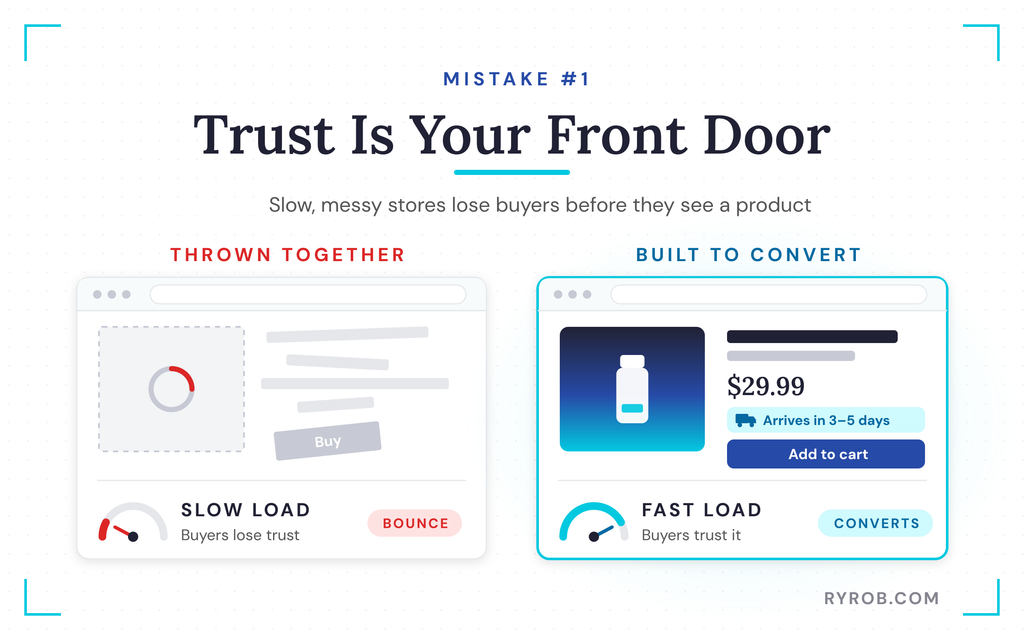
For example, a storefront built with Build Your Store can add dynamic delivery elements that show customers when they can expect their package, which improves customer experience and builds real confidence.
If your platform can’t give you a trustworthy storefront, it’s time to look at alternative eCommerce website builders. Avoid stolen product images or copy, too, since copyright infringement can get your store shut down. Knowing what dropshipping is and how it works helps you set up these trust signals early.
2. Pricing Blind Without Knowing Your Margins
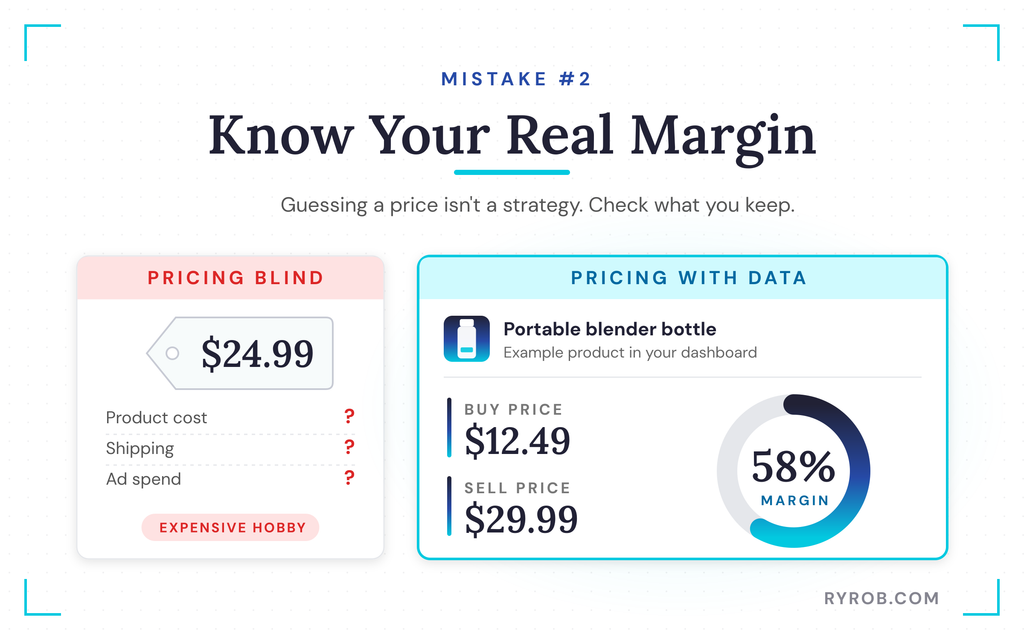
Way too many people set retail prices by eyeballing them. They never check what they keep after product costs, shipping, and marketing. If you don’t know your profit margins, you don’t have a business. You have an expensive hobby that sends invoices.
Low ticket items often carry thin margins, so you need volume to profit. High ticket dropshipping can offer more room, but only if your pricing fits your Google Shopping funnel.
You can pull your real margin on every single product inside your sourcing dashboard. You’ll see your buy price, recommended sell price, and estimated profit margin side by side. This lets you price intentionally based on supplier recommendations rather than just guessing.
When you check ecommerce margins explained, you’ll see why high-margin items like portable blender bottles give you the most return on your advertising spend. Price to protect customer lifetime value too, because repeat buyers are what make low ticket items worthwhile.
For a deeper look at the math, here’s a guide on calculating a profitable sale price.
3. Fulfilling Every Order by Hand
Every order you process by hand is a chance to type an incorrect address, miss a shipping deadline, or forget a tracking number. Each slip-up turns into a refund, a bad review, or a payment chargeback.
The fix is switching to automated order fulfillment with AutoDS. Using domestic suppliers can mean faster shipping, and they also cut delays that create customer service headaches.
When a customer orders from your website, an automated system passes the order directly to your dropshipping supplier. The supplier then uploads tracking info right back to your customer. That update can flow through email marketing and SMS marketing, so buyers stay informed without extra work from you.
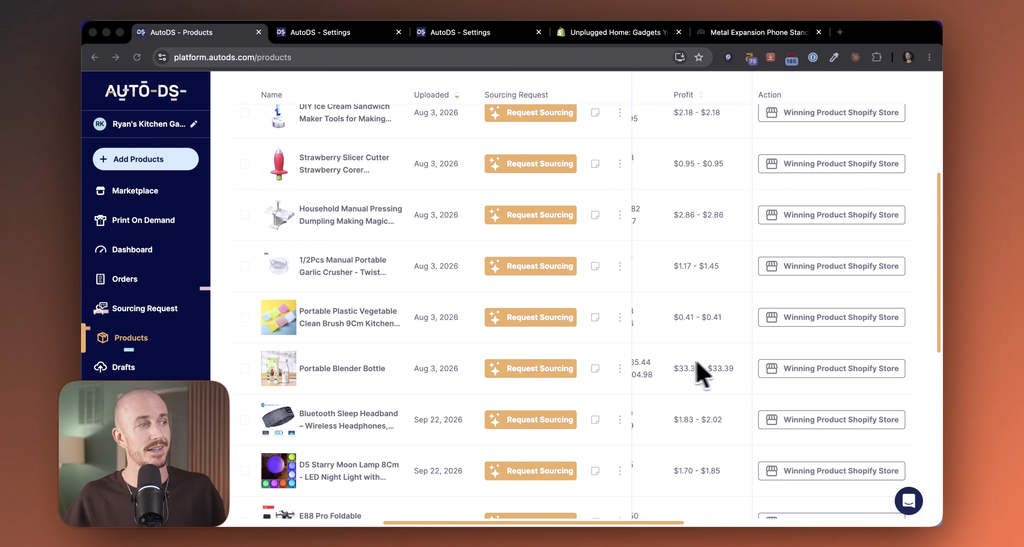
This works the exact same way whether you get one order or one hundred orders a day. It puts hours back into your week and stops human errors. You can see how ecommerce order automation handles this whole workflow for you.
If you want to source products the right way from the start, here’s my full walkthrough on how to start a dropshipping store with AI.
4. Overselling Items That Are Out of Stock
Here’s how this problem snowballs in a growing store. Your supplier quietly runs out of inventory, but your website doesn’t know. It keeps taking orders for products you literally cannot ship.
That leads to angry customers, refunds, and platforms reviewing your account standing. Those angry buyers can hurt customer lifetime value and brand awareness long after the refund clears.
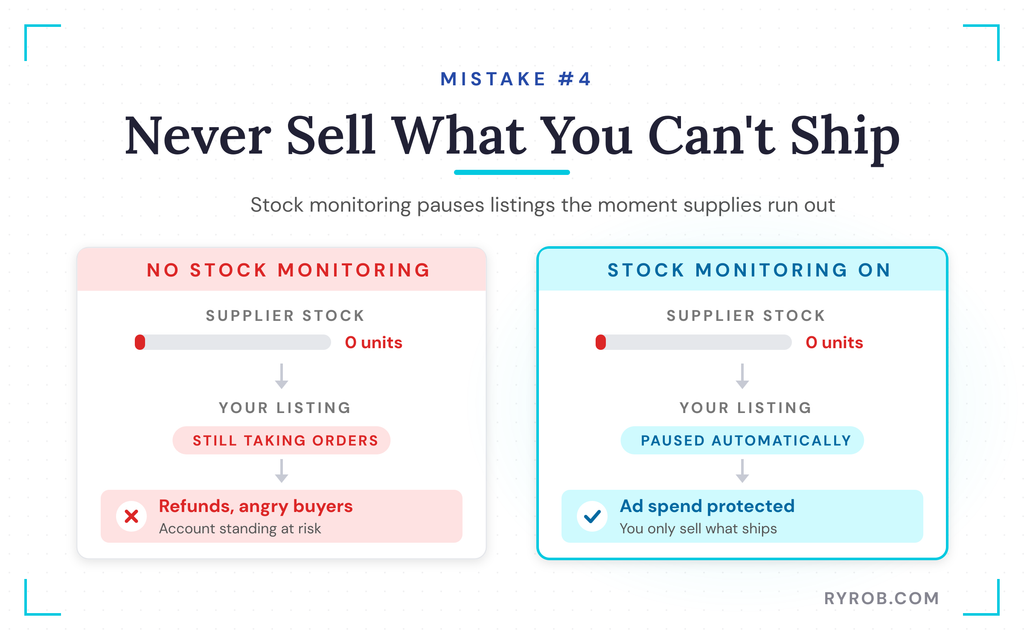
The fix is turning on stock monitoring in your settings. The moment a supplier runs low on inventory, your listing updates or pauses automatically, so you never sell something you can’t ship. This protects your Facebook ads and all paid advertising from going to waste on unavailable products.
5. Selling at a Loss as Supplier Costs Rise
By far the number one way dropshippers lose money is by selling products at a loss without realizing it. Your retail price stays fixed, but your dropshipping supplier’s cost usually does not. Sometimes they nudge prices up overnight while your store price stays the same.
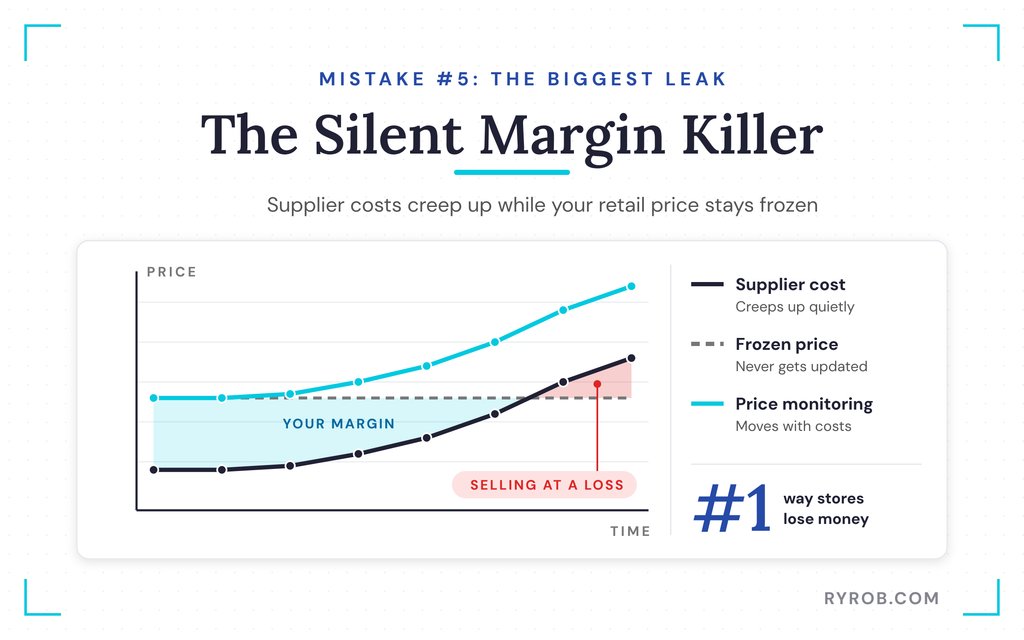
That hits low ticket items hardest, because supplier price creep can erase thin profit margins fast. Low ticket items leave almost no room for error, and domestic suppliers can change their costs too, so you might pay customers to take your products before you catch the mistake.
The fix is turning on price monitoring in AutoDS inside your store settings. Your platform watches supplier costs and adjusts so your margins hold steady instead of bleeding out overnight. This guardrail saves your business in niches where supplier pricing is volatile.
To see how founders manage these workflows, here’s a guide on running a dropshipping store with AI.
Why Your Tool Stack Decides If You Keep Your Profit
Everything we’ve covered sounds like back-office admin work, but these features decide whether your online store makes money or slowly bleeds cash over time. Monitoring tools and automated fulfillment handle the heavy lifting in the background. The tools you choose make a massive difference in your store’s survival rate.
That’s exactly why I set my own store up on AutoDS and Build Your Store, so the monitoring and fulfillment run quietly without me babysitting them.
If you want to see how modern builders handle this, here’s a walkthrough on building an ecommerce site with AI.
Retention tools like abandoned cart recovery, email marketing, and SMS marketing keep buyers coming back. A solid abandoned cart flow plus email and SMS automation turns one-time buyers into repeat customers, and that lifts customer lifetime value.
What These Fixes Still Can’t Do for You
None of these tools make you money on their own. They can’t replace product research, niche selection, or knowing your target audience. You still have to pick products people actually want and earn organic traffic, and that part is always on you.
You also have to run Facebook ads and paid advertising well. What these fixes do is stop avoidable losses so your business keeps its profit, and dropshipping stays one of the more realistic ways to make money online when you run it this way.
FAQs About Dropshipping Money Leaks
A few quick answers to the questions that come up most often about these dropshipping mistakes and how to avoid them.
What’s the Biggest Reason New Dropshippers Lose Money?
Selling low ticket items at a loss without realizing it is the top profit killer. Supplier costs can rise overnight while your retail price stays the same. Turning on price monitoring is the simplest guardrail against this problem, and it helps protect customer lifetime value.
Is Dropshipping Still Profitable?
Yes, but only when you treat it like a real business with solid product research, reliable domestic suppliers, and marketing. Profit margins are often thin, which means backend leaks hurt your bottom line much faster.
Do I Need Paid Tools to Avoid These Money Leaks?
Handling stock monitoring, price checks, abandoned cart recovery, and order fulfillment by hand becomes impossible as your order volume grows. Automated tools keep your operations lean while you scale your traffic. They also run SMS marketing follow-ups without extra staff.
How Do I Know If I’m Losing Money on an Order?
You often won’t spot it from your storefront, since your retail price looks the same while the supplier’s cost quietly climbs underneath it.
The cleanest way to catch it is to track your buy price, sell price, and profit margin side by side on every product. Price monitoring handles this automatically, flagging or adjusting listings the moment a supplier’s cost change would eat your margin.
Can I Avoid These Dropshipping Mistakes Without a Lot of Tech Skills?
Yes, and that’s the point of setting the guardrails up once. Most of these fixes, like stock monitoring, price monitoring, and automated fulfillment, are features you switch on in your settings rather than systems you build from scratch.
You turn them on early, and they run in the background while you focus on products and marketing.
Final Thoughts on Avoiding These Dropshipping Mistakes
The worst dropshipping mistakes are subtle, but they compound quickly if you ignore them. A store with automated monitoring and fulfillment protects its margins, tracks customer lifetime value, and steers clear of the leaks that sink most new sellers.
Building brand awareness helps you keep more of the profit you earn. Start your store right, run it smart, and you’re already ahead of most people who ever try this.
Stop the Quiet Money Leaks With AutoDS
I lean on AutoDS to keep my margins steady while the monitoring runs in the background. It’s the same setup I show throughout this post, from the Build Your Store storefront to automated fulfillment and price tracking. Grab the 3-day trial for a dollar and turn the guardrails on the way I did 👇
