
Most of what you’ll find about how to start dropshipping is either years out of date or quietly selling you a dream. So I wanted to experiment for myself and see first-hand how the dropshipping business model actually works (with AI) in 2026.
I’m all about AI tools, so I went with BuildYourStore to spin up a complete Shopify online store in minutes with the help of AI… and paired with AutoDS to handle the product sourcing and fulfillment that used to eat up all the time in this business model. That’s the kind of low overhead that makes this a side business worth exploring.
In today’s breakdown, there’s no fluff, just my honest take on this business model and what’s possible with it today. Here’s my full video tutorial walking you through exactly how I started a dropshipping store the other day:
Key Takeaways for Building a Dropshipping Store with AI
- Dropshipping is a lean business model where suppliers handle order fulfillment, leaving you to focus on product selection and marketing.
- Modern AI store builders and automation tools let you launch a fully functional ecommerce shop in less than an hour.
- Selecting the right niche and visual products with strong profit margins determines your long-term success.
- Turning on automated stock monitoring protects your margins and prevents you from selling out-of-stock items at a loss.
- Operating an online store takes real work, but skipping inventory risk makes it one of the most accessible side hustles for beginners.
Build an Automated Store With AutoDS
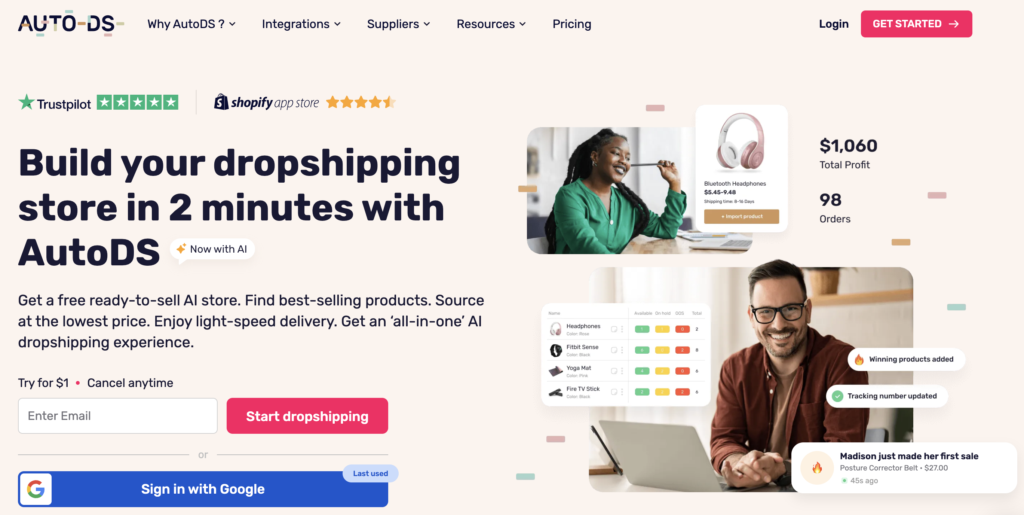
Everything I showed you in this build runs on AutoDS, from sourcing the products to putting order fulfillment on autopilot. It’s the piece that turns a store into something that actually runs itself instead of eating your whole week. If you want to follow along and set up the exact same thing, you can start with a 3-day trial for just $1 below 👇
Step 1: Choosing a Profitable Niche You Actually Like
Picking your niche is the most important early decision you’ll make. Choose something in a space you’d actually want to sell in. Proper niche selection helps you stay motivated. I like home and kitchen gadgets because the category is broad, highly visual, and drives impulse purchases.
You don’t need to spend hours overthinking this choice. You can always test another angle later if your first swing doesn’t hit, which is one of the main benefits of this business model. It’s also just one of many small business ideas you can start on the side.
Picking Visual Products People Buy on Impulse
Visual products sell best on social media platforms where you’ll likely run your marketing. If a product looks fascinating in a short clip, people stop scrolling and buy, which is where a real content marketing strategy starts paying off.
Effective niche selection relies on items that catch the eye instantly and solve a specific problem.
Validating Demand With Google Trends
Before committing, use thorough product research and gut check your ideas with Google Trends. Pair it with a free keyword research tool to see the exact terms people search for.
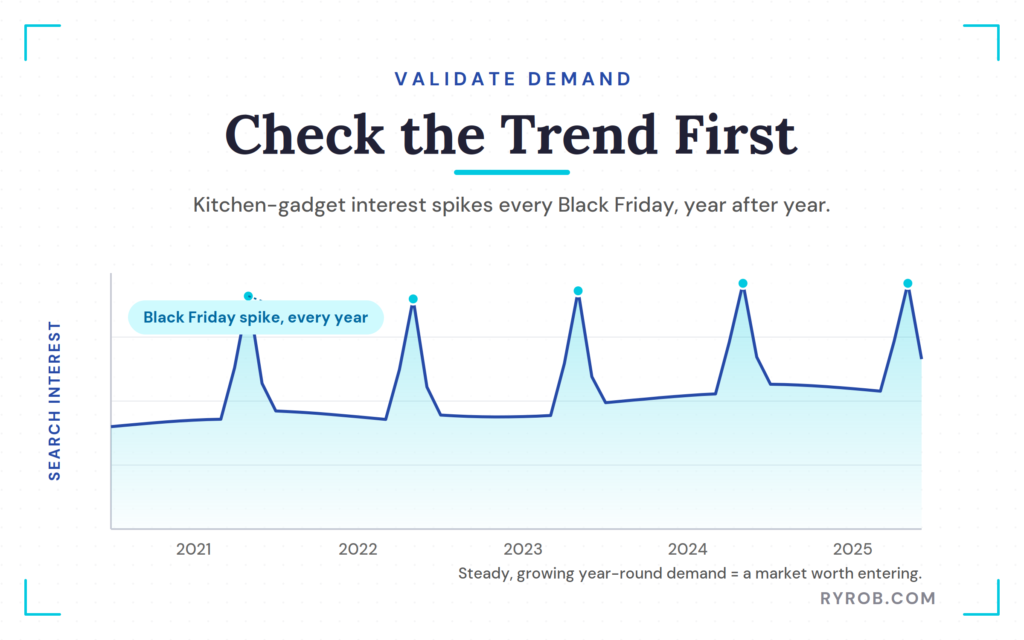
These free tools give you historical data on your side by showing search interest over time.
You can also run a quick competitor analysis to see what top brands are doing in your space. When you look at five-year trends for kitchen gadgets, you’ll often notice purchases spike every single year around Black Friday.
Finding a category with steady or growing interest ensures you’re entering a market where people are actively spending money.
Step 2: Building Your Shopify Store With AI
Building a store used to take days of coding and design work. Now, AI store builders can spin up a fully functional shop in minutes.
Choosing Your Store Style and Banners
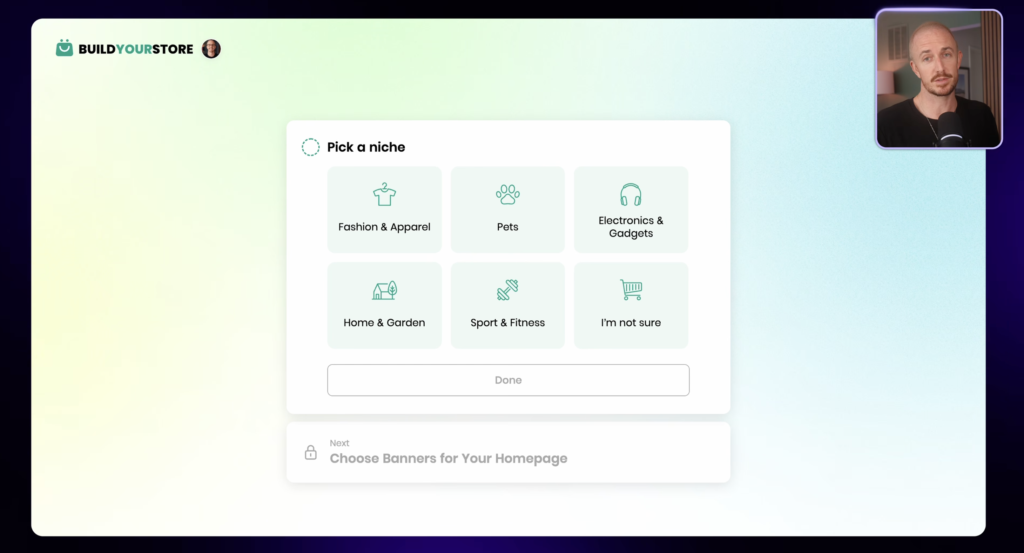
Using an AI store builder like BuildYourStore, you start by selecting your target audience, such as electronics and gadgets enthusiasts. The system then generates a clean homepage layout with matching banner images.
You can pick a style that fits your brand vision, knowing you can easily swap out graphics and colors later as your store evolves.
Claiming Your Store and Finishing Setup in Shopify
Once the AI generates your storefront, you connect it directly to Shopify to finish the build. Platforms like Shopify give you the infrastructure to accept payments securely and manage customer orders.
You can test the waters with a trial period before committing to a monthly plan, which keeps your startup costs remarkably low while you test your ideas.
Step 3: Connecting AutoDS to Source and Automate Orders
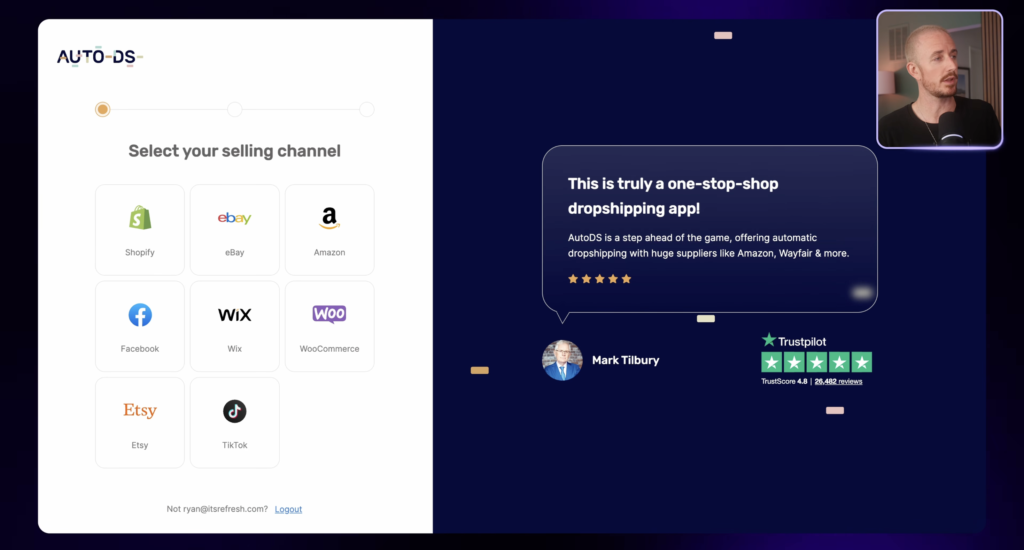
Once your storefront is live, you need an engine room to find products and handle fulfillment. Connecting an all-in-one dropshipping automation platform like AutoDS to your Shopify store bridges that gap.
Importing Winning Products in One Click
Inside your sourcing platform, you can browse hand-picked products that have already been vetted for good profit margins and fast shipping timelines.
When you find a portable blender, an automatic dumpling maker, or a clever kitchen tool you want to sell, you import it straight into your store with a single click. The system pulls over titles, descriptions, and pricing variants instantly.
Turning On Stock and Price Monitoring
The number one way beginners struggle in dropshipping is getting caught off guard when a third-party supplier changes prices or runs out of inventory.
Always turn on stock and price monitoring inside your dashboard. Proper inventory management helps you avoid customer complaints when items sell out.
If wholesale prices increase, price monitoring protects you from accidentally selling items at a loss.
Step 4: Launching Your Store on a Custom Domain
With your products imported and your safety nets turned on, it’s time to secure your digital real estate. Head back to your store builder to claim your custom domain.
Give your online store a short, memorable name that fits your niche, ideally on a clean .store domain. Stuck on a name? A domain name generator can shake a few ideas loose.
Connect that domain directly through your Shopify settings. In a matter of hours, your store goes live on the internet, ready for mobile shoppers browsing on their phones.
Common Dropshipping Myths Worth Ignoring
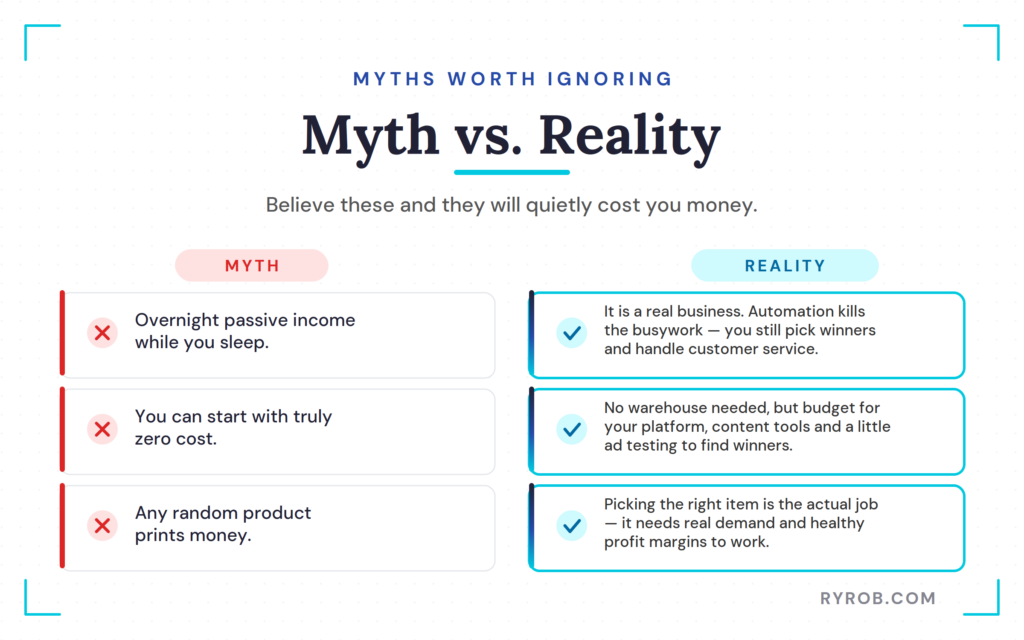
Plenty of myths surround this business model, and believing them can cost you money.
- Overnight passive income while you sleep. Dropshipping is a real business run with lean operations. Automation kills the busy work, but your time still goes toward picking winning items and managing customer service.
- You can start with zero cost. You don’t need thousands of dollars for warehouse inventory, but running an online business still means paying for your ecommerce platform subscription, content creation tools, and some initial ad testing.
- Any random product will print money. Picking the right item is the actual job. Your success relies entirely on finding goods with real consumer demand and healthy margins.
The Real Math Behind Dropshipping Profits
Understanding your unit economics keeps your business afloat. Let’s look at the actual math using realistic numbers and sample orders.
Say you sell a high-end portable blender for $200. The wholesale product cost and shipping from your supplier total around $165. Add $10 in advertising costs to acquire that customer through social media marketing.
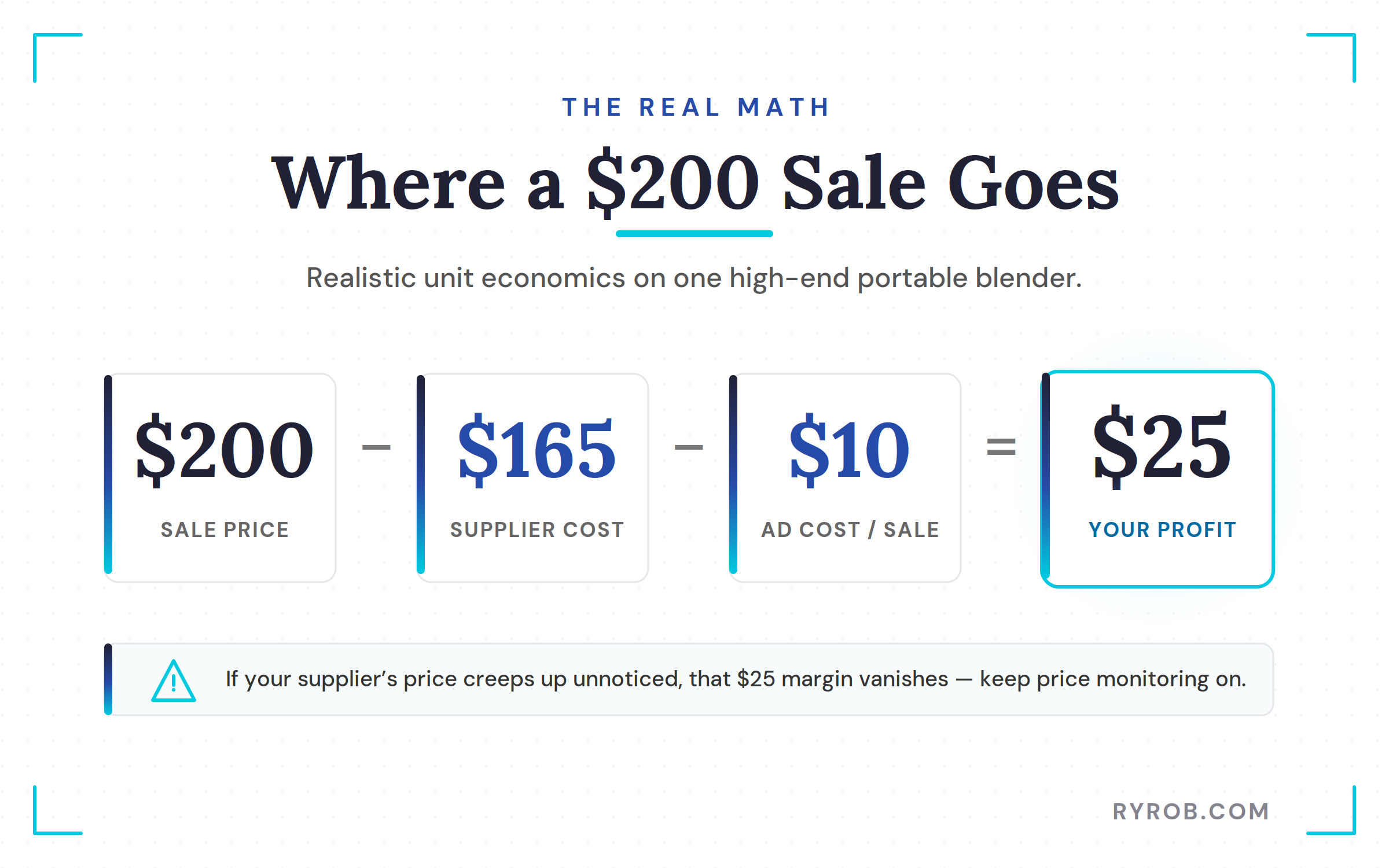
That leaves you with roughly $25 in profit per order. If your supplier’s price creeps up without you noticing, those thin profit margins vanish instantly. Monitoring your overall profitability and keeping automated price checks active is the only way to safeguard your bottom line.
FAQs About Starting Dropshipping
Here are quick answers to the questions beginners ask most before they launch.
How much money do I need to start dropshipping?
You don’t need thousands for bulk inventory, but you should budget for a basic ecommerce platform subscription, a domain name, and a small amount for testing ads and marketing creatives.
Do I need to hold any physical inventory?
No. The entire point of the dropshipping business model is that a third-party supplier holds the physical stock, packs the orders, and ships products directly to your customers.
How do I find winning products to sell?
You can use the vetted product research sections inside ecommerce automation platforms like AutoDS, or analyze market demand to spot trending consumer interests.
Is dropshipping still profitable?
Yes, but success requires treating it like a real business. Focusing heavily on product research, marketing quality, and customer satisfaction separates profitable stores from failed attempts.
Final Thoughts On How to Start Dropshipping
Starting an online store doesn’t require months of planning or massive upfront capital anymore, and it’s one of the more accessible ways to make money online today. If you want to figure out how to start dropshipping successfully, take action quickly and avoid the trap of endless preparation.
Focus your energy on marketing that drives steady traffic, and let reliable automation handle your order fulfillment. Protect your profit margins, keep your tools running, and launch your store today.
Build an Automated Store With AutoDS
Everything I showed you in this build runs on AutoDS, from sourcing the products to putting order fulfillment on autopilot. It’s the piece that turns a store into something that actually runs itself instead of eating your whole week. If you want to follow along and set up the exact same thing, you can start with a 3-day trial for just $1 below 👇
