

No matter how big or small your business is, if you want to show up in Google, you need backlinks. It’s the main way to improve your rankings, get more organic traffic, gain authority, and become more visible overall.
On top of this, if you want to get referenced in AI answers, external mentions are one of the major factors LLMs consider.
That’s exactly why link building for small businesses is a must today, in fact more than ever.
Now, let’s dive in and figure out how to build quality backlinks on a budget, even if you don’t have much SEO experience.
How is Link Building for Small Businesses Different?
If you take a look at the backlink profiles of most big companies, you’ll see hundreds of thousands of backlinks (if not millions).
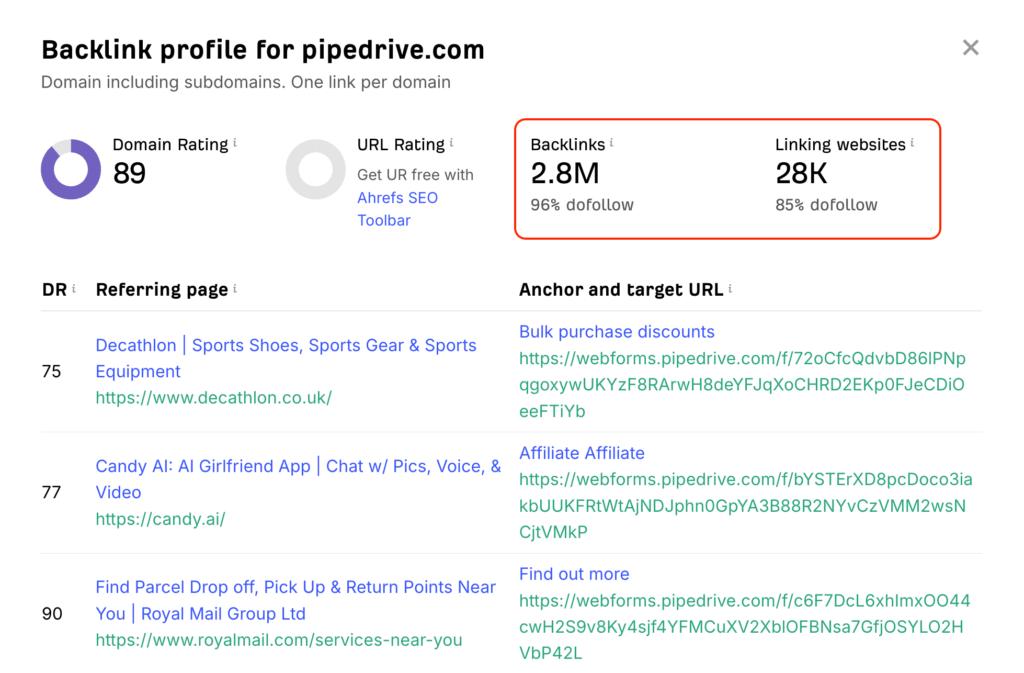
Source: Ahrefs
But getting there requires big budgets, lots of specialists, networking, and a lot of time. Most small companies simply don’t have this privilege.
Still, it doesn’t mean that you can’t do successful link building. Not at all. It simply means that your small business SEO strategy will be different.
- Yes, you might not have the resources to run industry research. But you can create lists of local events if you’re a physical business, for example. And this content can still attract backlinks.
- Yes, you might not have an outreach team that can score the best backlinks for you. But you can use a link building platform that removes all the outreach from the equation. I’ve also broken down some of my favorite link building tools you can use, too.
- Yes, you might not have a big content team that can post lots of content. But you can still do keyword research to find lower-difficulty search terms and write fewer practical articles that your audience will appreciate.
8 Effective Small Business Link Building Strategies (Beginner-Friendly)
We won’t suggest broken link building, fancy linkable tools, large-scale PR, awards, reclaiming unlinked mentions, or sponsorships. Not because those aren’t effective. They could be.
But they don’t usually work well for smaller companies and most startups.
Instead, we want to focus on more realistic techniques that can actually bring results without huge investments.
1. Build Links Through Your Partners
Most likely, you already have some backlink opportunities without even knowing it. So, it’s worth it to start here.
One of the easiest white-hat link-building techniques is to leverage your existing network. It doesn’t have to be related to SEO. Think of business partners, clients, suppliers you work with, and services or tools you use.
Most of them have websites, which means that you could get a link from them. Practically, this would look like this:
- List all of the potential businesses.
- Analyze whether their websites have great SEO metrics.
- Brainstorm a format where your link would fit in naturally. If it’s a tool you’re using, you can participate in their case study. If it’s your business partner, they could post a news piece about your collaboration and link to you, like in this Stripe example:
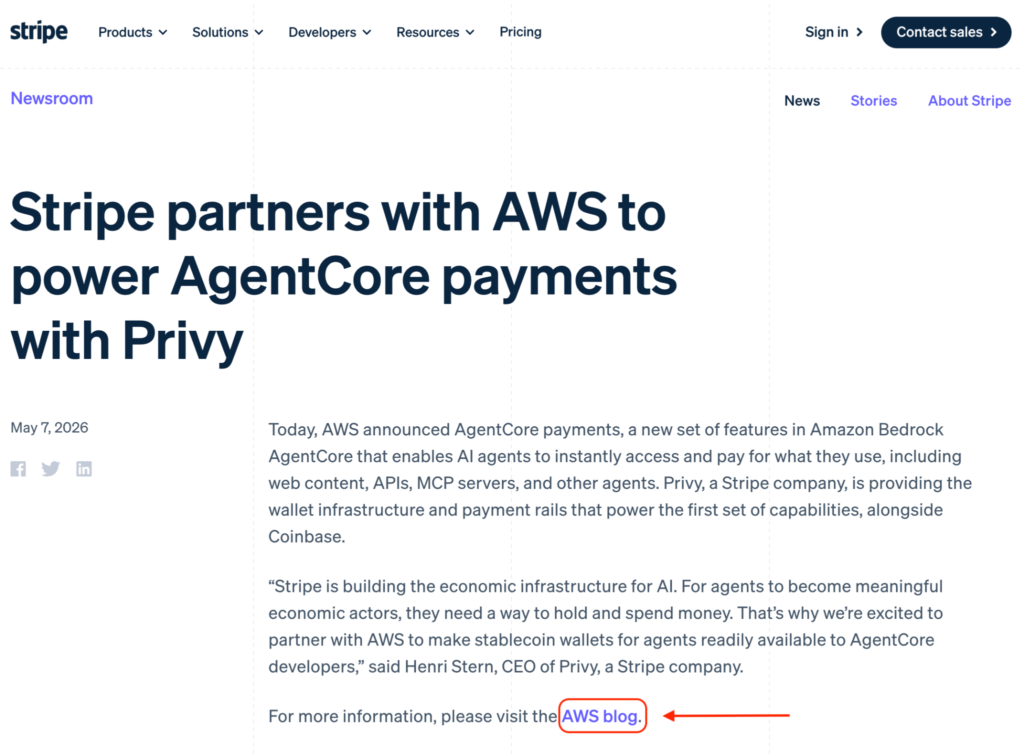
Source: Stripe
Some of these links can happen naturally. But if they don’t, you can take the initiative.
Just try to lead with value when you pitch this idea to your partners. Show them how they can benefit from this. If needed, you can also offer to link to them in return.
2. Grow Your Personal Brand
This isn’t the most typical link building advice. Yet, if you think about it, it’s much easier for people to trust other people, not faceless companies.
So, by working on your personal brand, you also make your small business more credible.
This tactic is quite popular in link building for startups. That’s why we often hear a lot about founder-led companies, as the owner/CEO gets invitations to podcasts, expert roundups, etc.
This is how you can approach it:
- Make sure your LinkedIn profile looks strong (it can be another platform, depending on your industry),
- Start posting regularly, focusing on real-life experiences,
- Engage with other people in your network to grow your visibility,
- When you mention other brands or people, make sure to tag them.
This doesn’t have to take lots of time. Dedicate 15-30 minutes daily, but stay consistent. Later, you can also start a blog or even operate your own newsletter. But first, choose one social media network (LinkedIn for most niches) and stick with it until you get some results.
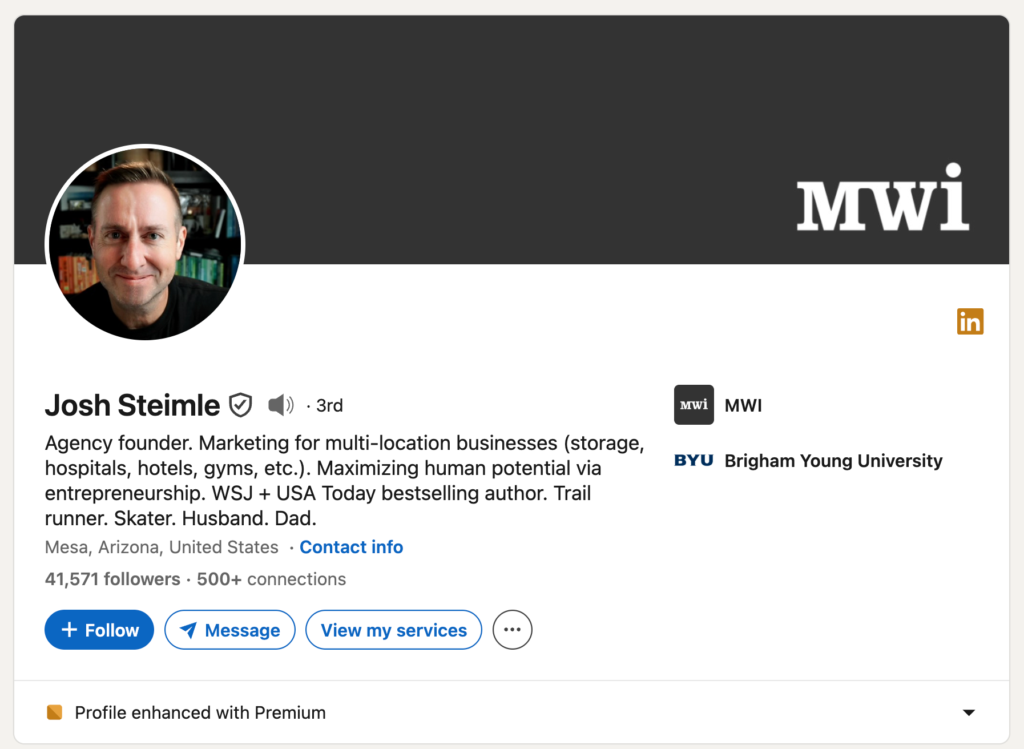
I’ve done this on my blog for more than a decade. Josh Steimle is another very good example of this.
Back in the day, his marketing agency almost went out of business. But thanks to his expertise, he secured a column in Forbes and started focusing on his personal brand. Guess what?
Now, his agency has offices in multiple countries. On top of this, he started several other companies. He writes books, gets invited to events as a speaker, and posts his columns in popular media outlets.
Would all this be possible without building a personal brand? Hardly.
Source: LinkedIn
3. Show Up in Relevant Listicles
Listicles are articles that compare different offerings in the same product/service niche (e.g., X best tools, X top services, etc.). Something like my roundup of the best hosting plans for bloggers this year is a great example:
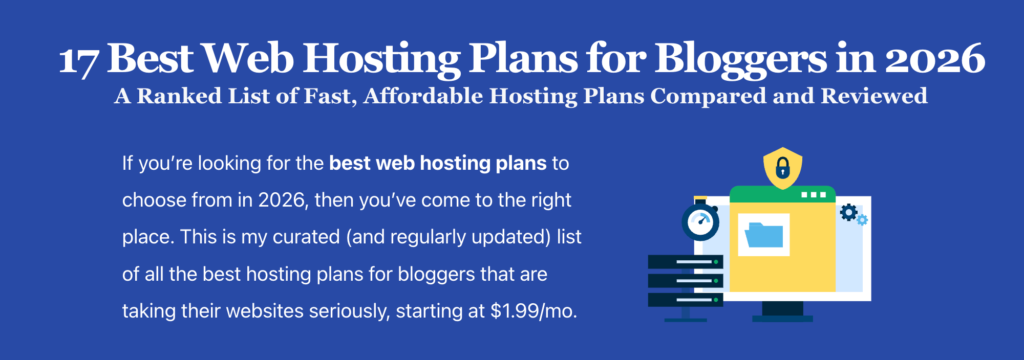
Appearing in these blog posts is one of the best small business link-building strategies. Here is why:
- You get natural contextual backlinks, as this type of content is quite popular.
- The more websites mention you, the more trustworthy you become.
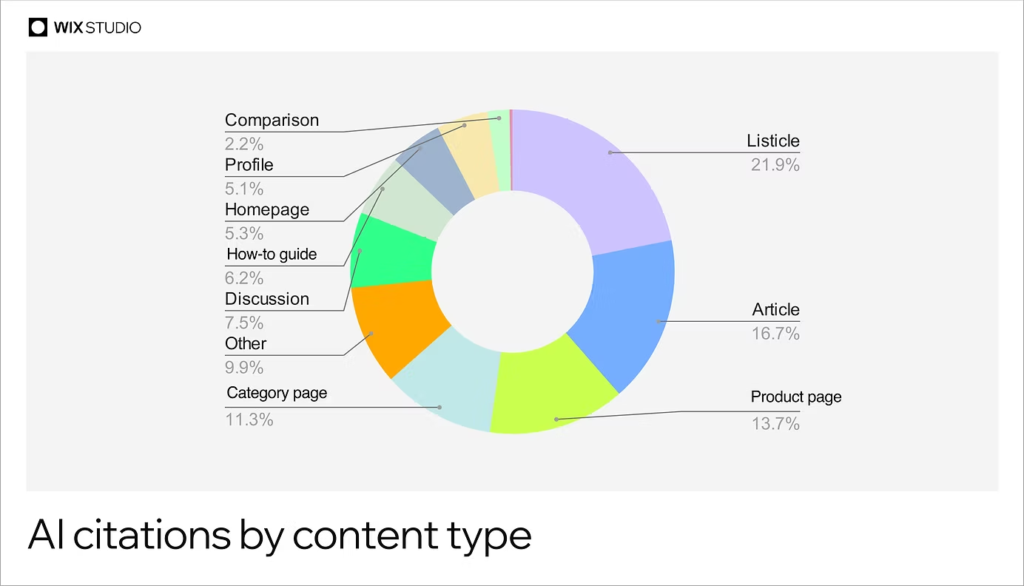
- On top of this, listicles work really well for AI visibility. According to Wix’s study, listicles are the most cited type of content in LLMs.
Source: Wix
As a small business, most likely, you won’t get mentioned by the top websites. But it doesn’t mean that you can’t use this strategy.
Just start with some more accessible targets.
For example, find listicles that mention the best companies in your niche in your area. Generally speaking, it’s much easier to get included in an article like “Best Interior Design Companies in Seattle” than something like “World’s Best Interior Design Companies”. You get the idea.
So, find some listicles online where your business could realistically fit well and reach out to them. Some of them might agree to add your mention.
4. Participate in Local or Online Events
Participating in other businesses’ webinars or industry events is another opportunity to become more visible and get backlinks.
There are two main approaches that work for smaller companies:
- Co-hosting online webinars and other activities. Find a business that is related to yours (not your direct competition) and offer to co-host something. Usually, it’s a Q&A session or a webinar. This way, you’ll promote each other through different channels and exchange backlinks.
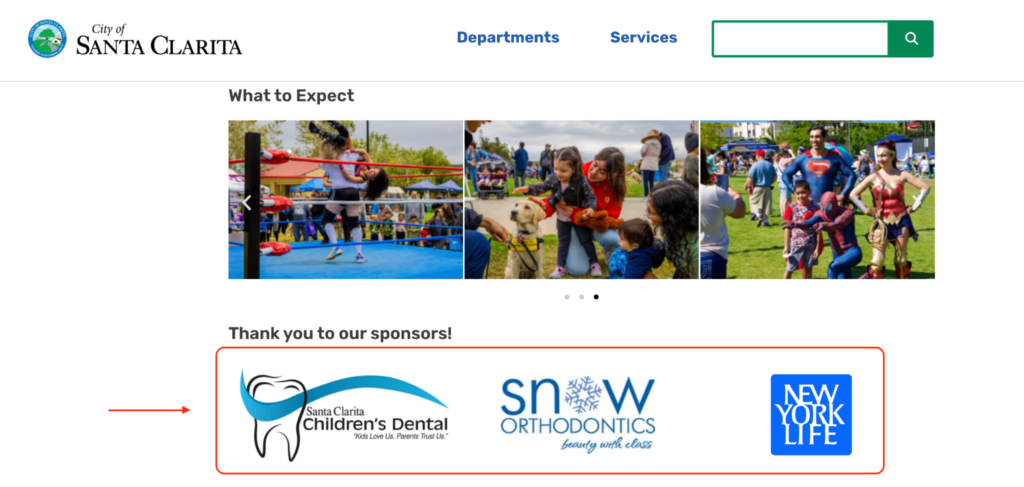
- Join a local event. It’s one of the most popular local business link-building tactics for a reason. When you become an event partner, you get mentioned on the landing pages, in news sections on the event’s websites, and so on. All these are natural link opportunities.
Source: Santa Clarita
5. Become a Member of Relevant Organizations
By now, you’ve probably noticed the pattern: link building opportunities are closely connected to the overall online visibility of your business.
So, here is yet another tip on how you can gain both more visibility and backlinks: memberships.
This includes everything, from associations to local clubs. You can even support an NGO. Of course, you don’t have to join or support anything for links alone. But it’s a very nice added perk, don’t you think?
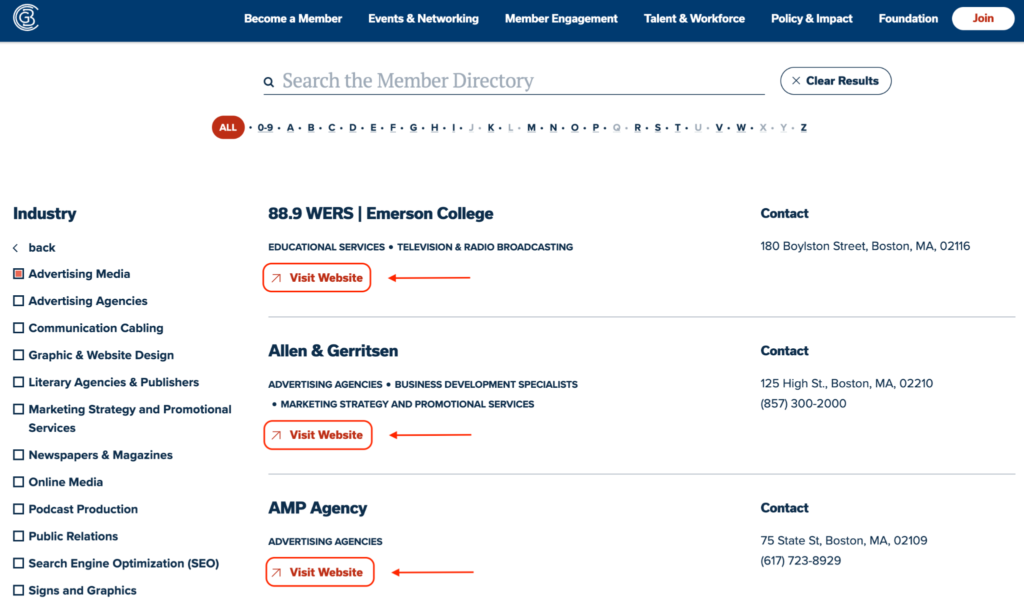
Here is, for example, the member directory of the Greater Boston Chamber of Commerce. As you can see, every listed business gets a backlink in addition to other promotional activities they offer.
Source: Greater Boston Chamber of Commerce
6. Create Content Others Want to Reference
SEO is largely about content. And no matter how much you try to gain backlinks through all the possible exquisite channels, your website should be the main driver of natural backlinks.
These usually come from unique content that’s easier to reference than to write from scratch.
Bigger companies can invest in industry research and some fancy free tools. But what can a small business do?
- Share your real-life experiences, case studies, and descriptive examples (these things are practical and unique),
- Create compilations of locally relevant information (for example, best events in Atlanta this summer or best coffee places for work in Austin),
- Design visuals and optimize them for SEO (many users use Image search to find supporting pictures for their content),
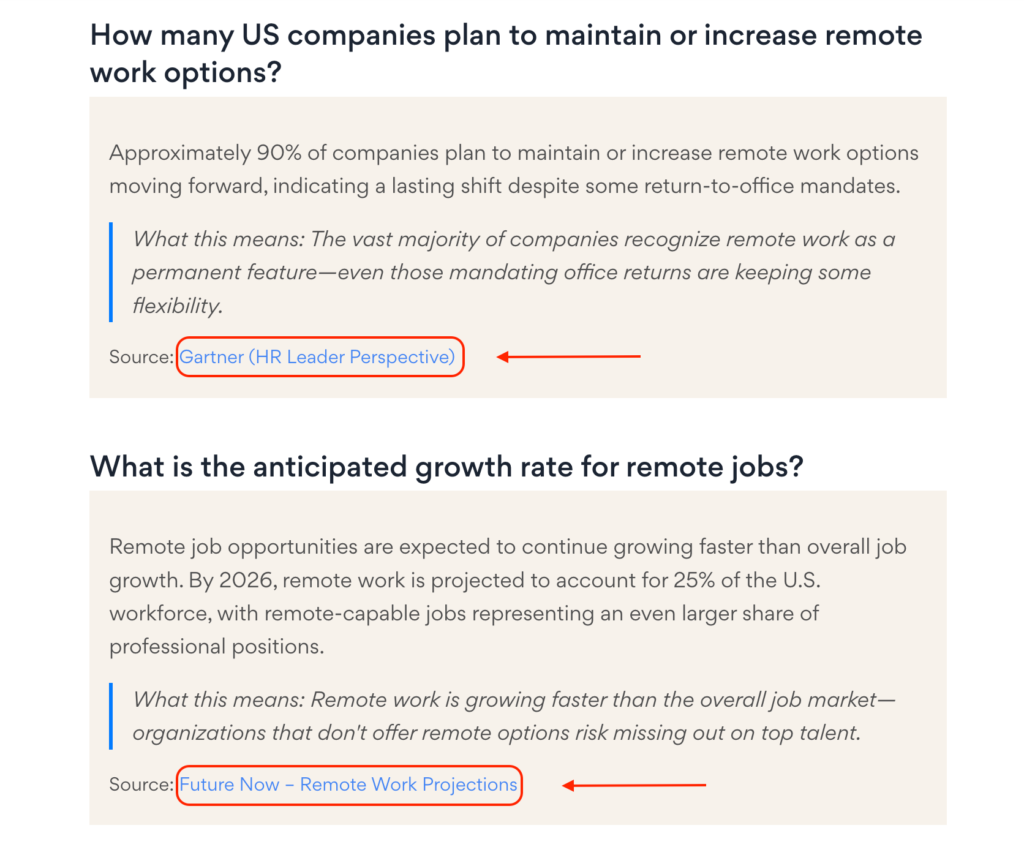
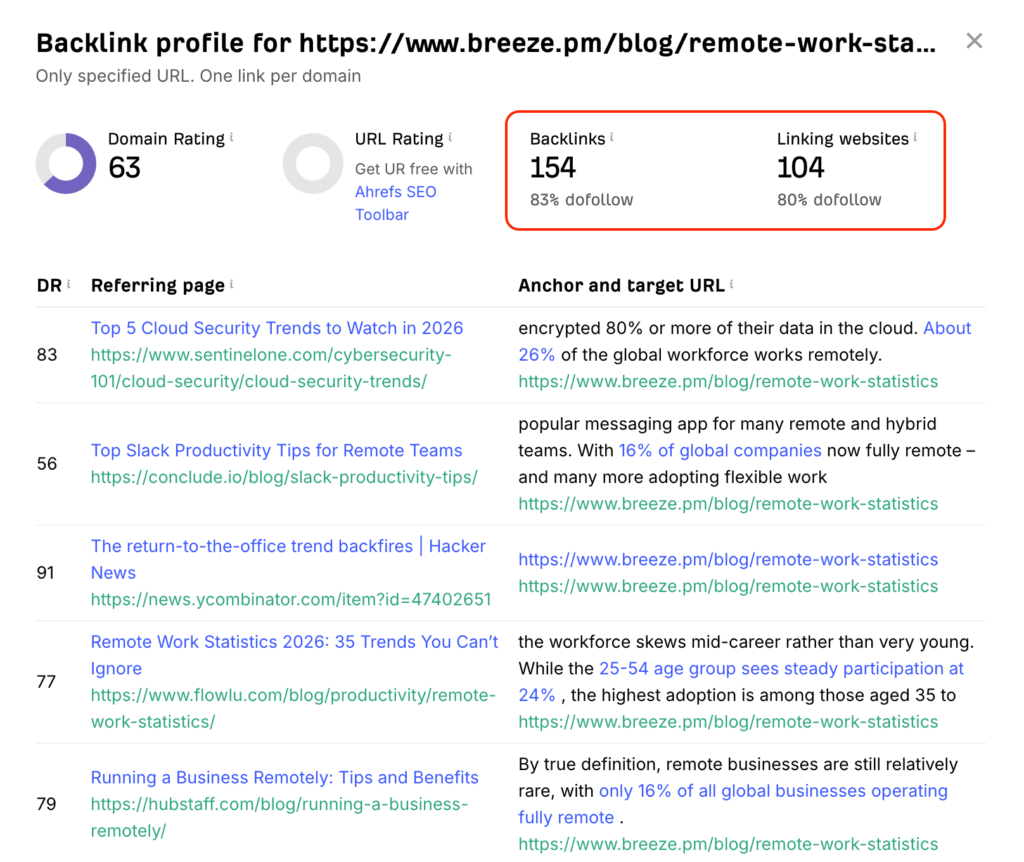
- Write a stat compilation article (if you struggle with creating unique content, this is an option for you). Choose a topic in your niche and collect interesting data from credible reports. Many writers don’t bother to check the original source and just link to a compilation. Here is an example of a blog post like this:
Source: Breeze
And here are the backlinks they got (not bad considering there is no original information):
Source: Ahrefs
Also, focus on fewer but more in-depth pieces. While it might seem like you just need to post more, this isn’t true. The thing is that AI can generate a pretty normal blog post in seconds.
That’s why average content is useless these days.
So, instead, write highly expert pieces that will help you create topical relevance and become someone whose opinion matters in your niche. This deeper content has much more link building impact, as it’s entity-based.
Search engines don’t only care about keywords or backlinks in isolation.
They care about topical authority, meaning how expert you are in your niche. And when you regularly cover relevant keyword clusters and build niche backlinks, you gain more importance in your industry.
7. Use Guest Posting
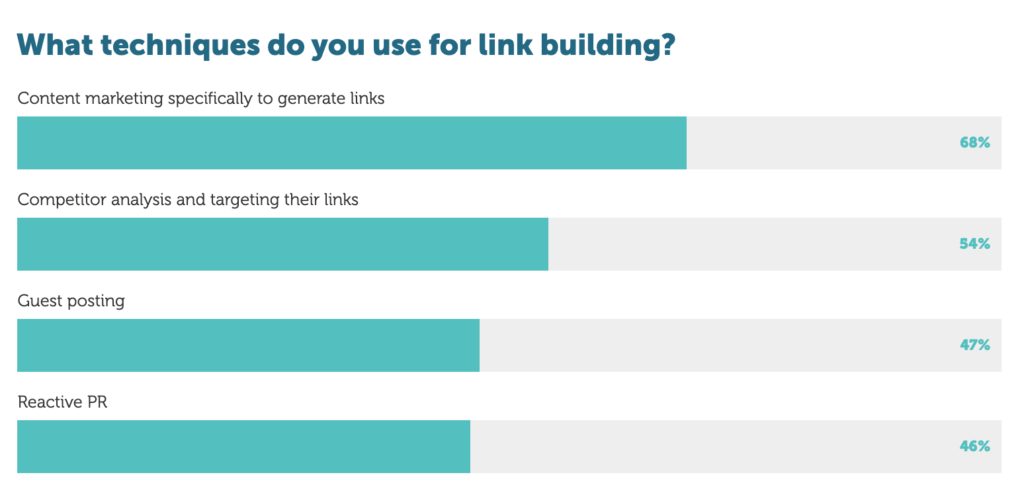
Guest blogging is one of the most popular white-hat link-building techniques. It’s also one of the tactics that has existed for decades, so it’s truly time-tested.
Source: Aira
The idea of this strategy is simple:
- Find websites that accept guest submissions in your industry. The easiest way to do that is by googling your niche + “guest posting,” “submit an article,” “submission guidelines,” “write for us,” etc.
- Shortlist the ones that have good SEO performance.
- Prepare a good, tailored pitch and reach out to them. This is the point where most guest blogging strategies fail. So, pay extra attention to this one. You can read this blog post on blogger outreach to better understand the process (it also includes bad examples of pitches you don’t want to repeat).
- When the website editor responds, approve the topic and outline (if needed), and write a high-quality guest post, like you’re writing it for your own website.
- Choose a natural anchor text and a contextual placement for your link, and voilà, you have your guest posting backlink.
8. Start Exploring Digital PR
This point is the last one on our list for a reason. Doing effective PR is often much more complex for small businesses than the other link-building techniques we’ve mentioned above.
But it’s effective. So, it’s worth keeping this strategy in mind.
The toughest of all is earned media coverage.
If you’re growing your personal brand, it might be easier to get. But anyway, when possible, start building a network of people who work in different media outlets, even if it’s a local newspaper. Over time, these can bring you great results.
There are also a couple of easier solutions for your PR:
- Press release distribution services: There are platforms where you can post your press releases for a fee (e.g., PR Newswire, EIN Presswire). While they mostly use nofollow links, it’s still great for AI visibility and keeping your backlink profile more natural.
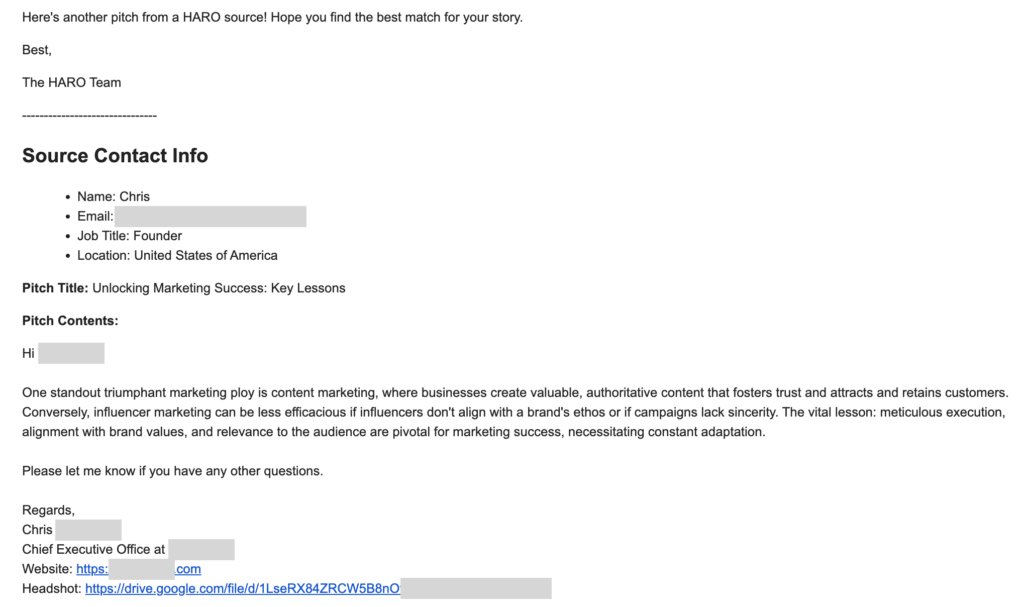
- Platforms for helping journalists: These are HARO, Help a B2B Writer, Featured, etc. The main idea here is that sometimes reporters are looking for expert quotes or opinions. And these platforms can help you find some of those journalists. The key is to provide real value and stand out, not to get lost in hundreds of pitches like these:
Link Building Mistakes to Avoid (and Stay Safe)
Link building is one of the most important SEO strategies. But if you get it wrong, it can backfire. So, these are the no-gos to avoid at all costs:
- Any quick fixes: Unfortunately, link building takes time. So, when someone offers you a quick and easy solution, it’s likely a road to nowhere.
- Cheap, spammy links: There are marketplaces filled with offers to get you 10 links for $100. It might sound interesting, but that’s the worst thing you can do because no credible website would agree to these terms. So, instead of getting those spammy backlinks, find reasonably affordable link-building services. Yes, it will be pricier and take longer, but you will get actual results instead of Google penalties.
- AI-generated copy: When you submit any content to other websites, provide human copy. AI slop won’t give you any extra points.
- Generic automated outreach: Because of limited resources, some small businesses start running automated outreach, hoping to get more backlinks. While there is nothing wrong with automation, when your emails look like generic spam, they won’t help you. So, it’s generally much more effective to send fewer but personalized emails.
Start Small, and Link Building Compounds Over Time
When you first start working on your backlinks, it feels impossible. You spend hours looking for opportunities, send dozens of emails, and still get no replies.
But it isn’t just you. Everyone goes through this.
The most important part is that now you know how to get backlinks for a small business website. And all that’s left is to actually start acting consistently.
It really gets easier over time. Yes, everyone says that. But when it comes to link building, it’s true.
And if it still feels too much, you can always outsource. Check out my breakdown of the best SEO link building tools I actually use and it’ll steer you in the right direction.
Use My 50+ Powerful Free Blogging Tools Today
When I first started blogging, I couldn’t afford fancy tools. That sucked. And that’s why I’ve built a stable of powerful free blogging tools ranging from keyword research to an AI article writer, blog idea generator and more. Forever free for all to use—no strings attached.
