

To turn a hobby into a business, validate market demand, outline a business plan, and separate your business and personal finances. Then choose a sustainable business model, track profit, and build financial stability before scaling.
For years, I told myself my website and YouTube channel were just a passion project that happened to make money. Then in 2019 it quietly outearned my day job by a lot. It exploded past $50,000 a month… and I was still treating it like a hobby.
That’s when I learned how to turn a hobby into a business the hard way, because mine started to suffer without it. The thing that turns a hobby into a real business isn’t how much you make. It’s three simple money systems that decide how you relate to your business.
Once they’re in place, they change everything. I know this because I’m doing things differently this time around. Here’s the full video I recorded on these three systems, if you’d rather watch.
Key Takeaways on How to Turn a Hobby Into a Business
- Revenue alone doesn’t make a small business. A side hustle generating thousands can still be a fragile hobby without systems.
- A separate business bank account acts as the foundation for keeping your business and personal money distinct.
- About 5 minutes a week of transaction reconciliation keeps your books current and prevents a massive backlog.
- Profit isn’t the same as revenue once tools, contractors, processing fees, and taxes come out of what you earn.
- A bookkeeper or accountant is worth it once tax complexity, entity questions, or your first hire show up.
- Clean books usually pay for themselves through missed deductions you catch and hours of cleanup time you save.
Run Your Money Systems on the Same Platform I Use: Xero
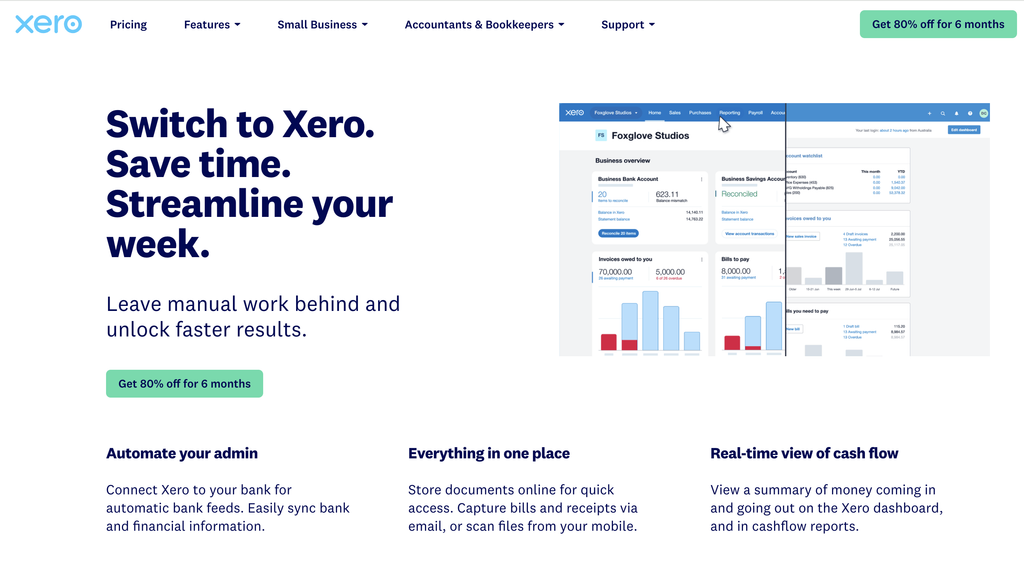
Xero runs the money side of my whole business. It plugs into thousands of banks, categorizes most transactions for me automatically, and makes it easy to hand my accountant real-time access when I need to. New users get 80% off any plan for six months👇
Hobby vs Business: How to Turn a Hobby Into a Business
Most people think it’s revenue that grows to a certain point and one day, poof, it magically pays all your bills. It’s a business. Well, it’s not.
A real business starts with market research, a clear understanding of target customers, and a business plan that tests market demand before significant investment. Revenue alone doesn’t make it one.
You’ll notice what’s missing from this list of business traits, which is how much you make. A $2,000 a month side project with strong systems, competitive analysis, and a consistent brand identity is more of a real business than a $200,000 hobby flying blind. Systems are the differentiator.
Why a Well-Paying Passion Project Can Still Be a Hobby
A passion project that pulls in solid cash can still collapse if it has nothing holding it together underneath. An online presence and regular social media activity can create attention without building a durable business.
When your income comes from irregular sources like sponsorships, affiliate commissions, course sales, and ad revenue, a great month can easily hide a bad quarter. Even a farmers market seller can earn money without having reliable systems behind the sales.
If you don’t know your fixed costs, or you mix your funds together, you’re flying blind. You might feel successful because the top-line number looks high, but one unexpected tax bill or slow month can wipe you out.
The 7 Signs Your Side Project Is Already a Business
A real business relies on a clear set of operational habits rather than raw revenue numbers. Here’s my quick list of things that make a business a business.
- Having a separate bank account
- Consistent income
- Tracking every expense
- Paying yourself on a schedule
- Setting aside money for taxes
- Looking ahead at cash flow
- Bringing in help when you need it
Score yourself honestly on these seven items to see where you stand. If you want to dive deeper into running a venture alongside a full-time job, take a look at this start a side business while working full-time guide.
System 1: Separate Your Business and Personal Money
System one is the first financial system every business owner needs, even if it means a trip to the bank. When rent and Netflix subscriptions sit in the same account as sponsored content payments, you can’t answer, “How’s the business doing?”
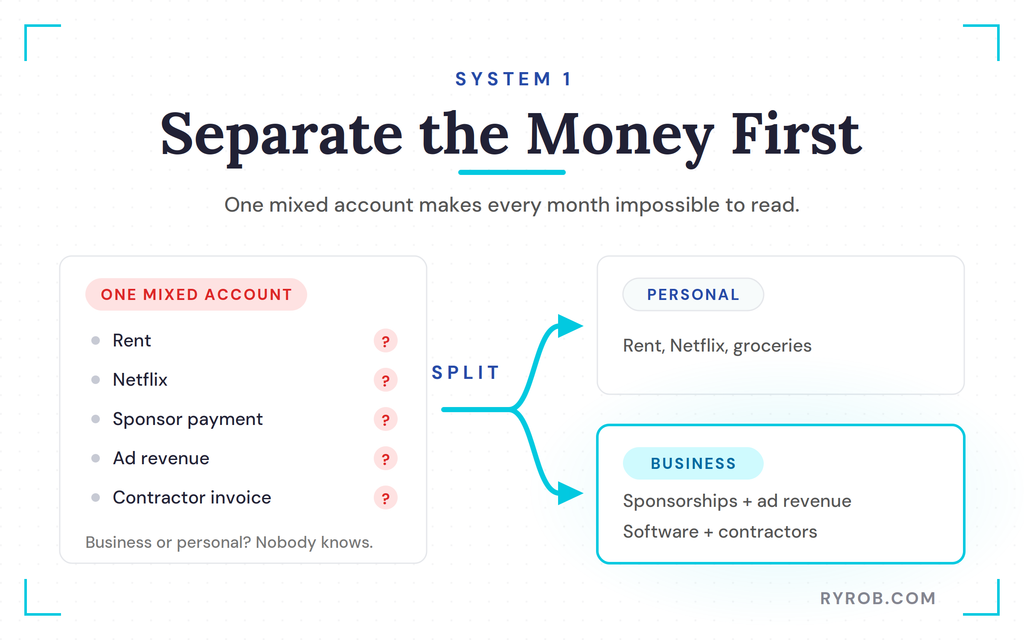
Tax time turns into highlighting your own bank statement line by line. When personal and business spending are mixed together, it’s a disaster waiting to happen.
If you’re in this situation today, though, don’t trip too hard. It’s pretty easy to get things straightened out.
Open a Dedicated Business Bank Account First
The fix is setting up a dedicated business bank account. It creates a clean record of startup expenses and revenue.
I connect mine to Xero, which integrates with thousands of financial institutions around the world. Once a business-only account feeds your financial management tool, everything that lands in the platform is already business related.
You’ve given yourself a clean data source to build more systems around. If you want to explore the setup process further, my creator bookkeeping guide walks through the core habits.
Recording Owner Draws and Mixed Spending Cleanly
Life is messy. Sometimes you’ll buy something for the business on your personal card or pull a little out for yourself. In Xero, those get recorded as owner funds coming in or an owner draw going out.
That way, the business books stay honest and accurate come tax season. This can quickly get out of hand if you’re not using a proper tool to manage and track everything.
Exactly how you set that up depends on your legal structure and where you’re located. It also varies depending on whether you’re running a sole proprietorship or a limited liability company.
That’s exactly the kind of thing you’ll want a professional to help you decide, since tax treatment varies by location and entity type.
System 2: Know Your Numbers on a Rhythm
System number two is to know your numbers on a rhythm. You don’t have to become an accountant, but you do have to keep a schedule that respects the need to oversee your finances. Here’s the schedule I run.
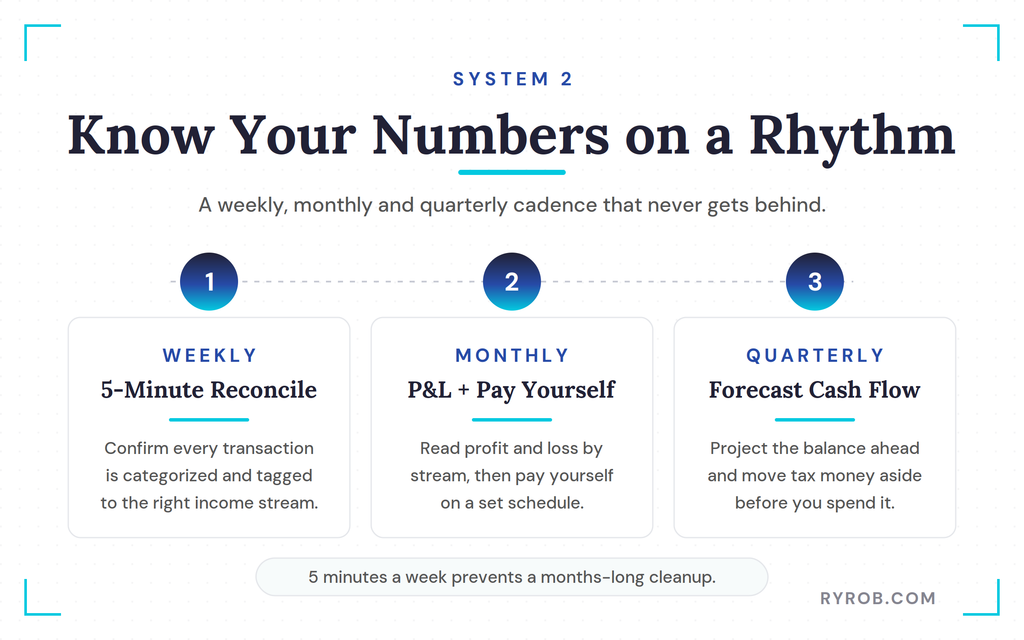
At the end of every week, I spend about 5 minutes reconciling the week’s transactions, including income and expenses. Tools like Xero make this easy because you can set up rules to auto-reconcile most transactions. Then you can simply oversee the results.
I’ll be honest, the only reason this weekly habit sticks for me is that Xero does most of the categorizing on its own.
Since Xero is the tool doing the heavy lifting here, I teamed up with them so you can try it too. New users get 80% off any plan for six months through my link.
The 5-Minute Weekly Reconciliation Habit
Put simply, this means confirming that all your transactions are categorized correctly while they’re still fresh. Tagging each income transaction into its appropriate income stream also helps reveal which sales channels perform best.
Reviewing sponsorships, products, and other revenue sources over time can also help you refine your pricing strategy. If you need a breakdown of how to segment your revenue streams without opening multiple bank accounts, read this how to track multiple income streams guide.
A short weekly check keeps you from facing a massive cleanup months down the road.
Monthly Profit and Loss and Paying Yourself
At the end of each month, I read my profit and loss statement by stream. This gives me a snapshot of the health of each segment of my business. Then I pay myself on a set schedule, instead of grabbing money whenever the account looks healthy.
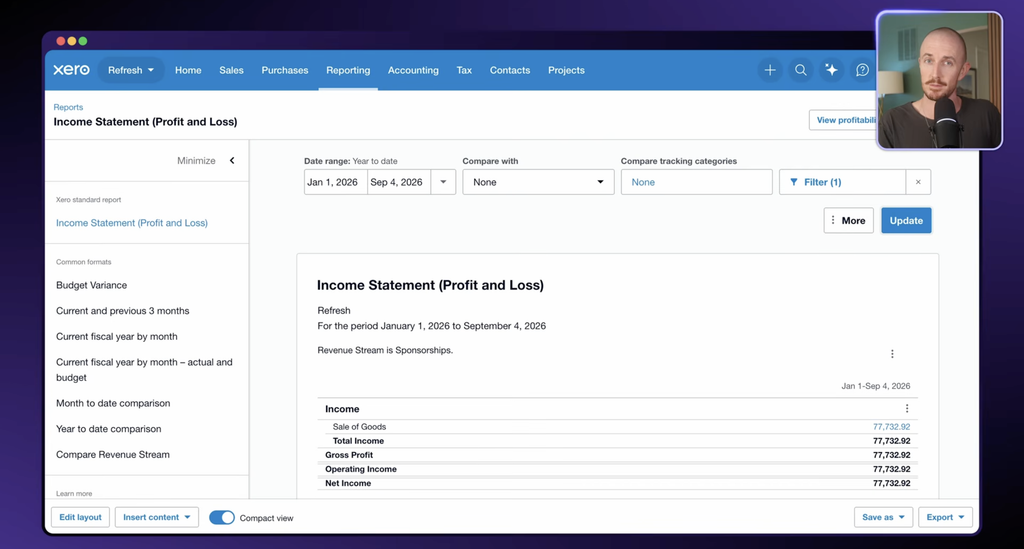
Profit is not revenue. A monthly statement reveals your actual profit margin, not just top-line revenue.
When $10,000 comes in and $7,000 goes out for software, contractors, and tools, cost analysis shows what remains. Your decisions need to reflect that $3,000 balance.
Quarterly Forecasting and Setting Aside Tax Money
At the end of each quarter, I run a short-term cash flow forecast. Xero is great here because it projects my balance into the future using trends, invoices, and bills it already knows about.
This helps me move the right amount of money aside for tax liabilities before I accidentally spend it. Trust me, you do not want to do that.
Forecasting feels optional when it’s just you. But once you’ve got recurring costs or a contractor, looking around the corner stops being a nice-to-have.
System 3: Know When to Bring in a Bookkeeper or Accountant
System number three is the one most solopreneurs I know like to avoid, usually because they think it’ll save them money. Knowing when to bring in a professional matters.
Doing your own books does not mean doing everything yourself forever.
Signals It’s Time to Hire a Pro
These are the moments I watch for to know when it’s time for a bookkeeper or accountant to join my business:
- When tax time gets bigger than I can confidently handle myself
- When entity questions come up, like sole prop versus LLC versus S-corp
- When I make my first hire
- When money starts crossing state or country lines
- When I catch myself spending hours on finances instead of my actual business
That entity question is worth pausing on. Choosing between a sole prop, an LLC, and an S-corp is a consequential decision that can materially affect your tax liabilities, so it pays to get real advice instead of relying on online forums.
For more tips on handling your obligations, check out this tax tips for bloggers resource.
Giving Your Accountant Access to Your Books
The part I love about this system is where tools like Xero and a good accountant work together instead of against each other. I don’t have to email anyone a spreadsheet.
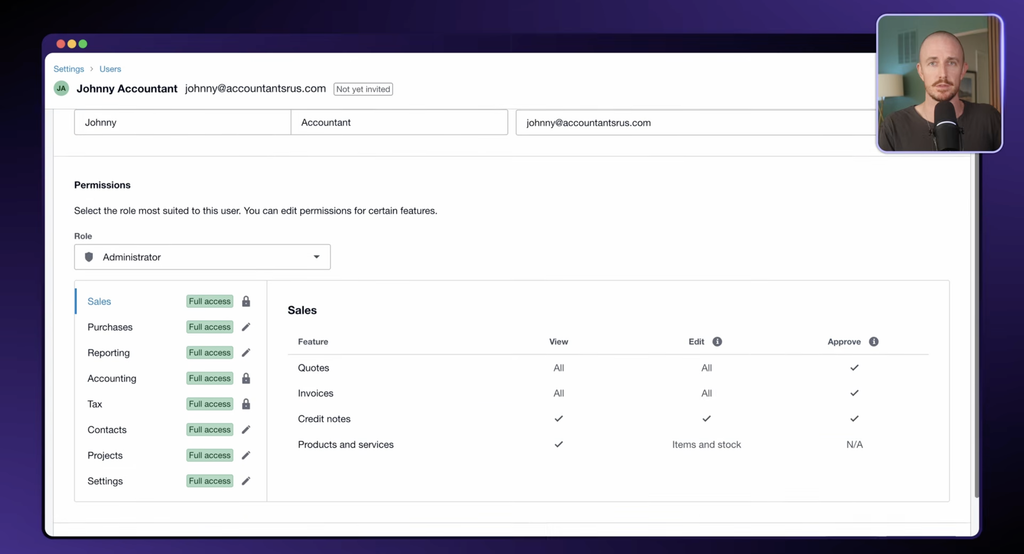
I can give my accountant direct access to my Xero books by going to settings, selecting users, and inviting them by email. Then I set their access to administrator. They accept, and my books show up inside their dashboard in real time.
Now, I know that hiring an accountant sounds expensive when you’re small, but a good accountant can pay for themselves through missed deductions, recovered time, and avoided mistakes. Professional help isn’t mandatory for every new venture, but it can reduce burnout and give you back valuable time.
The cleaner your books are, the less your accountant has to charge you. That frees their time for advice about growing, instead of weeks spent on cleanup.
FAQs About Turning a Hobby Into a Business
A few of the questions I get asked most about making this shift.
Is my blog a hobby or a business if I make money?
Making money doesn’t automatically make your blog a business in the eyes of the IRS. The distinction comes down to your intent, your recordkeeping, and whether you treat it like a commercial enterprise with a profit motive.
Do I need an LLC to start bookkeeping?
You don’t need an official LLC to practice good bookkeeping. You should track your income and expenses and keep separate accounts from day one, regardless of your legal structure.
How often should I reconcile my transactions?
Reconciling your accounts weekly takes only about 5 minutes and prevents messy backlogs. If weekly isn’t possible, aim for a strict monthly review to catch errors early.
What happens if I mix personal and business spending?
Mixing personal and business funds makes it difficult to track profitability and can create a nightmare during tax season. It also weakens the legal protection of an LLC if you have one.
Do I need a separate bank account for every income stream?
You don’t need a separate bank account for every revenue source. Modern accounting software lets you use tracking categories to segment affiliate income, ad revenue, and sponsorships inside one main account.
How long should I keep records for my business?
According to the IRS record retention guidance, you should generally keep tax records for 3 years from the date you filed your original return.
For employment tax records, this guidance on recordkeeping for small businesses suggests holding onto them for at least 4 years.
Final Thoughts About Turning Your Hobby Into Business
You are not your business. The day your money systems make that distinction real is the day the hobby is over and the business is born.
Separate your money into dedicated accounts, know your numbers on a weekly and monthly rhythm, and bring in a professional when the signals show up. None of this is about earning millions of dollars right out of the gate.
It’s about organization and clarity. Clean books give you the freedom to stop stressing over merchant names and focus entirely on creating great work for your audience.
Run Your Money Systems on the Same Platform I Use: Xero
Xero runs the money side of my whole business. It plugs into thousands of banks, categorizes most transactions for me automatically, and makes it easy to hand my accountant real-time access when I need to. New users get 80% off any plan for six months👇
